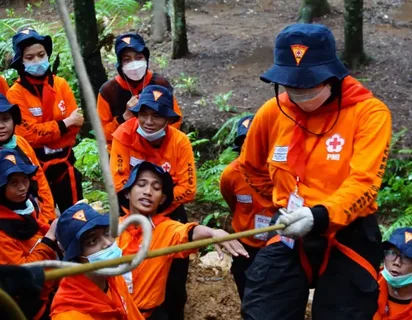
In a world increasingly defined by individualism, there exists a powerful counter-movement — one built on selflessness, solidarity, and service. Korps Sukarela, or the Volunteer Corps, stands as one of the most enduring expressions of this spirit, particularly in Southeast Asia. Whether responding to a devastating flood, mentoring underprivileged youth, or organizing community clean-up drives, Korps Sukarela volunteers are the quiet backbone of resilient communities. This article explores what Korps Sukarela is, its rich history, its roles and responsibilities, how it operates, and why it matters more than ever today.
What Is Korps Sukarela?
Literally translating to “Volunteer Corps” in English, Korps Sukarela (often abbreviated as KSR) is a structured volunteer organization widely present in countries like Indonesia and Malaysia. At its core, it is a non-profit, community-driven body dedicated to humanitarian aid, disaster response, and social development. Unlike casual volunteerism, KSR operates within a formal structure — with trained members, defined roles, and coordination with government agencies — making it an institutionalized force for positive societal change.
Korps Sukarela thrives on the principles of selflessness, dedication, teamwork, and integrity. Volunteers commit themselves to helping others without expecting anything in return, driven by genuine care and commitment to the community. Its mission revolves around mobilizing volunteers to support public welfare, especially during crises or in underserved areas.
A Rich History Rooted in Service
The roots of Korps Sukarela trace back to the mid-20th century. In Malaysia, the organization’s history is closely linked to the Home Guard established during the Malayan Emergency declared in 1948. Over time, the formal volunteer corps took shape, and by 1953, Korps Sukarela was established as a voluntary organization focused on disaster relief and civil defense.
In the early years, the primary focus was emergency response — teams of volunteers were trained in first aid, firefighting, and search and rescue, responding to disasters like floods, landslides, and building collapses. The 1970s marked a significant shift, as the organization expanded to include community programs: volunteers began visiting senior citizens, organizing recreational activities for youth, and promoting civic responsibility. Over the years, its role grew to provide community services and youth development programs across the country.
On the national institutional front, Malaysia formalized its volunteer corps further. On 22 June 2012, RELA was rebranded as the Malaysian Volunteer Corps pursuant to the Malaysian Volunteer Corps Act 2012, based on the concept of 5K 1P — peace, security, well-being, harmony, unity, and solidarity. Beginning from 28 August 2013, it was further upgraded to a federal department known as the Malaysian Volunteer Corps Department (RELA).
Today, with a rich history spanning over 65 years and comprising over 100,000 volunteers nationwide, Korps Sukarela has become an indispensable pillar of Malaysian civil society.
Roles and Responsibilities
The scope of Korps Sukarela’s work is broad and deeply impactful. Volunteers take on a wide range of responsibilities that can be grouped into three main areas:
1. Disaster Relief and Emergency Response
When natural disasters like floods, landslides, or fires strike, Korps Sukarela helps with evacuation, search and rescue operations, and the distribution of essential supplies. Volunteers may help set up temporary shelters, provide medical assistance, or help clear debris. All members across the country are ready to respond when emergencies arise, working closely and efficiently with government agencies like the police, fire department, and National Disaster Management Agency.
2. Community Outreach and Social Programs
Korps Sukarela doesn’t just respond to emergencies — it plays a proactive role in community building. Activities range from running blood donation drives and cleaning local parks to educating residents about hygiene and health. Volunteers also engage in tutoring underprivileged children, assisting at care facilities for the elderly or disabled, and serving meals for those in need.
3. Administrative and Organizational Support
Administrative roles are also integral to supporting the organization’s operations, involving event coordination, volunteer recruitment, communication management, and record-keeping. These behind-the-scenes contributions are just as vital to KSR’s effectiveness as frontline work.
Structure and Operations
Korps Sukarela typically functions within a structured hierarchy to ensure effectiveness. The general format includes national coordinators who oversee policy and strategic direction, regional leaders who implement plans at the district or province level, team leaders who manage operations during missions or events, and volunteers — the backbone of the corps — comprising individuals from all walks of life.
The organization often partners with international NGOs and government agencies to leverage resources and expertise. Digital platforms for training, communication, and coordination are increasingly being introduced to enhance efficiency and broaden reach.
Training: Preparing Volunteers for the Field
One of the hallmarks of Korps Sukarela is its commitment to training. To become a member, volunteers undergo a comprehensive orientation and basic training program covering disaster response techniques, first aid, CPR, organizational structure, and mission values. After completing basic training, volunteers can pursue specialization training in areas such as search and rescue, medical assistance, communications, and community education. This specialized training prepares volunteers to handle diverse emergency situations and contribute effectively to disaster relief efforts.
Although volunteers come from different backgrounds, they are well-trained in life-threatening situations and capable of working under significant pressure — a testament to the quality of KSR’s preparation programs.
Challenges and the Road Ahead
Like any volunteer-driven organization, Korps Sukarela faces its share of challenges. Limited resources and lack of funding can sometimes hinder large-scale projects. Recruiting new volunteers and retaining them can also be difficult over time. Despite these obstacles, the spirit of volunteerism within the organization remains strong.
Looking forward, Korps Sukarela aims to grow its presence in more regions and engage a wider demographic, including corporate volunteers and retirees. The focus is also shifting toward long-term projects that foster community resilience rather than just providing immediate relief — a strategic evolution that reflects the organization’s maturity and ambition.
Why Korps Sukarela Matters
In an era of rapid urbanization and social fragmentation, organizations like Korps Sukarela serve a vital function beyond logistics and emergency response. They cultivate a sense of social responsibility and active citizenship. They remind communities that their strength lies not in institutions alone, but in the collective will of their people.
Volunteerism fosters connections among people, creating a sense of belonging and cooperation. For the volunteers themselves, engaging with KSR enhances skills, expands knowledge, and opens doors to new friendships built on shared values. Whether it is leadership, communication, or teamwork, each experience contributes to personal development.
How to Join
Anyone passionate about volunteering — especially youth and community members — can join Korps Sukarela. The process typically involves registration, an interview, orientation, and placement into a relevant team or program. Time commitments vary, and volunteers can contribute according to their availability. To find a branch near you, check official websites, community centers, or local government offices for contact information.
Conclusion
Korps Sukarela is much more than a volunteer group — it is a movement that embodies the true spirit of giving back. Through their unwavering dedication, volunteers build stronger, healthier, and more resilient communities. From disaster response to education programs, from blood drives to senior citizen visits, their impact ripples far and wide. As Malaysia and the broader region continue to face new challenges — from climate-related disasters to social inequality — the role of Korps Sukarela will only grow in importance. If you have ever wanted to make a real difference, joining Korps Sukarela may be your most meaningful first step.