Some games are defined by a moment in time. Animal Crossing: New Horizons is one of them. Released on March 20, 2020 — right as the world locked down — it became more than just a Nintendo Switch game. It became a lifeline. A place to gather, breathe, and slow down when everything outside felt impossibly fast. More than six years later, with a major new update, a Nintendo Switch 2 Edition, and a 25th anniversary celebration under its belt, the question is no longer “Is this game good?” — it’s “Is it still worth your time?”
The answer is yes. Emphatically, yes.
What Is Animal Crossing: New Horizons?
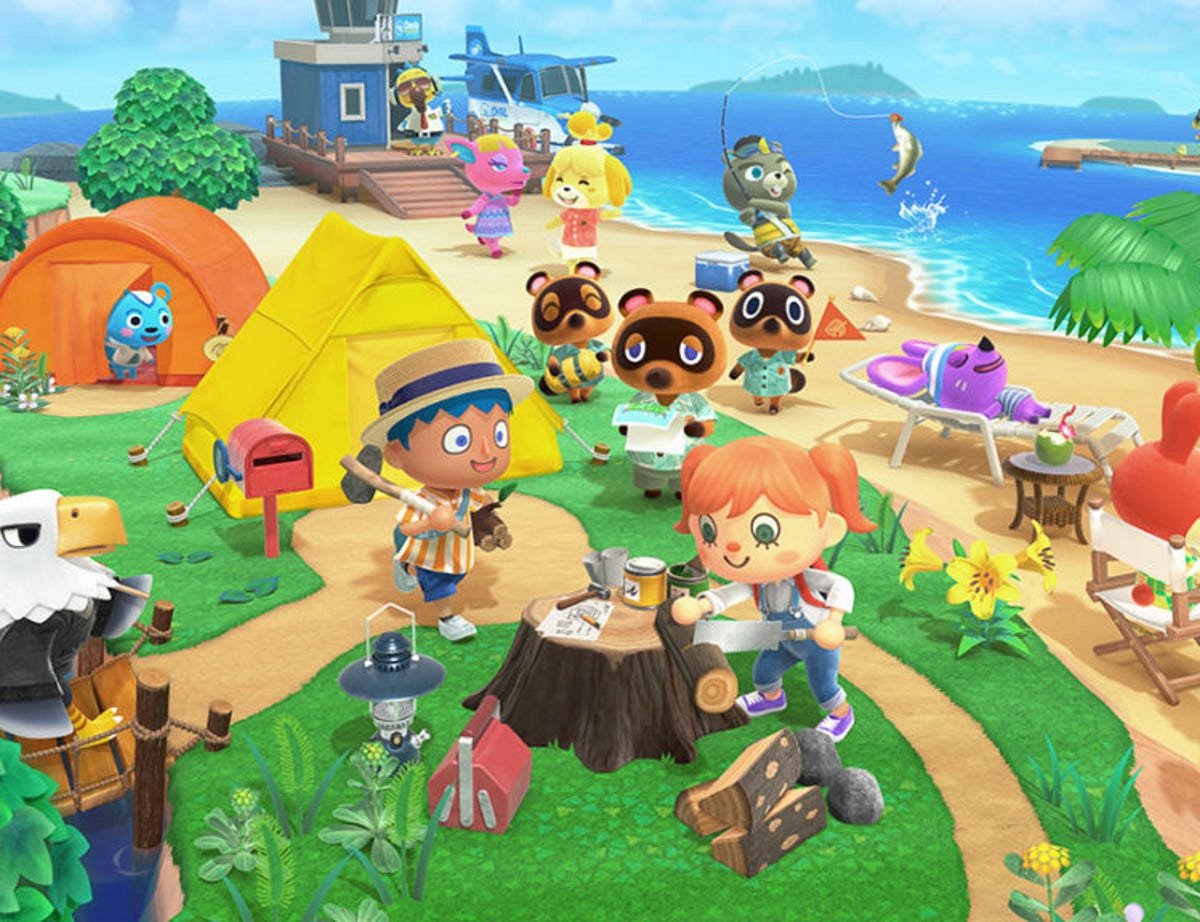
Animal Crossing: New Horizons is a social simulation game developed and published by Nintendo for the Nintendo Switch. It is the fifth main installment in the Animal Crossing series. In it, your character moves to a deserted island after purchasing a getaway package from Tom Nook — a charming, raccoon-dog entrepreneur with suspiciously good business instincts. Starting with nothing but a tent and some basic tools, you gather resources, craft items, and slowly develop the island into a thriving community filled with cute animal residents.
There is no villain to defeat. No final boss. No ticking clock. The game runs in real time, meaning the time of day and season on your island matches your actual local time. If it is raining in your town, it might be raining on your island. If it is winter, your island will be blanketed in snow. This real-world rhythm is one of the game’s most quietly brilliant design choices — it makes your island feel genuinely alive.
Gameplay: Relaxed, Creative, and Surprisingly Deep
At its core, the daily loop of Animal Crossing: New Horizons is built around fishing, bug catching, fossil digging, talking with villagers, and decorating. It sounds simple — and in many ways it is — but that simplicity is a feature, not a limitation. The game emphasizes creativity, personal expression, and social engagement, appealing to players of all ages.
What separates New Horizons from its predecessors is the unprecedented level of creative control it hands to the player. The Island Designer feature allows you to completely reshape the water features and hills of your island — a tool that gives players an almost intimidating level of creative freedom. You can also craft furniture, place it outdoors, grow crops, design custom clothing patterns, and recruit up to ten animal villagers to live alongside you.
The crafting system was a new addition to the series, and while it adds depth, it has also drawn criticism. Making items one at a time — especially when you need large quantities — can feel tedious. Thankfully, the Version 3.0 update addressed this long-standing frustration by adding bulk crafting, meaning players no longer have to craft items one by one when they need multiples. It is a small change with a massive quality-of-life impact.
The game starts slowly. The first few days are deliberately paced, easing new players into the rhythm of island life. Some players find this frustrating, particularly those accustomed to action-heavy games. But for those who give it time, the rewards are considerable. As your island grows, so does the depth of what you can do — from terraforming entire landscapes to hosting themed events for online visitors.
The Villagers: The Heart of the Game
No review of Animal Crossing: New Horizons is complete without talking about the villagers. These are the anthropomorphic animal residents who share your island, each with distinct personalities, catchphrases, and daily routines. There are hundreds to discover across different species and personality types — lazy, peppy, cranky, smug, normal, jock, snooty, and uchi.
Building friendships with villagers is one of the game’s most rewarding long-term activities. They send letters, give gifts, share DIY recipes, and react to how often you interact with them. Watching them walk the paths you designed, visit the shops you built, and comment on your island’s decorations creates a sense of genuine community that is rare in gaming.
The villager dialogue has been criticized for being repetitive over time, and that is a fair point. Long-term players will eventually exhaust the variety. But for newcomers and casual players, the charm of your villagers never really wears thin.
Multiplayer: Better Together
Animal Crossing: New Horizons truly comes alive when played with others. With a Nintendo Switch Online subscription, you can visit friends’ islands, leave messages, trade items, and show off your creativity. Up to eight players can visit an island at once, making it a genuinely social experience.
The Version 3.0 update, released in January 2026, expanded this further. On the Nintendo Switch 2 Edition, up to 12 players can now play together online simultaneously — a significant upgrade from the original cap. For families and friend groups, this makes the multiplayer experience feel more festive and inclusive than ever.
The Version 3.0 Update: A Surprise Return to Form
Perhaps the most exciting development for Animal Crossing fans in recent years was the arrival of Version 3.0 — the first major content update since Version 2.0 launched in November 2021, which Nintendo had announced at the time as the game’s final planned update. Four years later, Nintendo surprised the entire fanbase by returning with a substantial free update alongside the Nintendo Switch 2 Edition.
The flagship addition is the new Resort Hotel, run by Kapp’n and his family. Players can design themed guest rooms, dress mannequins in outfits for hotel visitors to wear, and earn Hotel Tickets to spend at a new souvenir shop. It is a fresh activity loop that breathes new life into islands that long-time players may have felt they had “finished.”
Also added in Version 3.0 is Slumber Island — effectively a creative mode for Animal Crossing. On a Slumber Island, players can freely place furniture from a menu, instantly grow plants to any stage, and easily install bridges and inclines without the usual resource costs. For decoration enthusiasts and island designers, this is a game-changing addition.
Other quality-of-life improvements include the ability to store trees, shrubs, and flowers (previously impossible), expanded home storage upgradeable up to 9,000 items, and the return of fan-favorite character Resetti, who now offers an island cleanup service. The update also brought exciting crossover content, including LEGO-themed furniture, Legend of Zelda and Splatoon collaboration villagers, and playable retro Nintendo consoles accessible in-game.
Most recently, Version 3.0.2 — released in April 2026 — added a commemorative leaf statue to celebrate the Animal Crossing series’ 25th anniversary, delivered directly to players’ in-game mailboxes.
What Could Be Better
No review would be complete without honest criticism. Animal Crossing: New Horizons has real flaws that have frustrated players since launch.
The “one island per console” policy remains one of the most divisive design decisions in the game’s history. Only one island exists per Nintendo Switch system, meaning families sharing a console must share a single island — and only the first registered player can make major progression decisions. This limits the experience significantly for households with multiple players.
The overall progression can also feel unnecessarily slow at times, particularly in the early weeks. Some upgrades and unlocks are time-gated in ways that feel arbitrary rather than intentional. And while the multiplayer is fun, meaningful cooperative activities beyond visiting and trading remain limited.
The Verdict
Animal Crossing: New Horizons has sold nearly 49.32 million copies as of December 2025, making it the second best-selling Nintendo Switch game of all time — and those numbers tell a story. This is a game that resonated with an enormous, diverse audience, and for good reason.
It is not a perfect game. Its slow start, repetitive dialogue, and one-island-per-console policy hold it back from true greatness. But as a creative sandbox, a social experience, and a daily ritual of calm and joy, it is nearly unmatched in gaming. The Version 3.0 update has added more reasons to return — or to start for the first time — and the 25th anniversary celebration shows that Nintendo is far from done supporting it.
Whether you are a returning islander dusting off your Switch or a complete newcomer curious about what all the fuss is about, Animal Crossing: New Horizons is worth every minute you give it.