If you’ve been searching for “fluoride treatment near me,” you’re already thinking about your oral health in the right way. Fluoride treatment is one of the simplest, most affordable, and most effective preventive dental procedures available — yet it remains one of the most overlooked. Whether you’re a parent looking to protect your child’s developing teeth or an adult wanting to reduce your risk of cavities and enamel erosion, a professional fluoride treatment at your local dentist’s office can make a significant and lasting difference. This guide covers everything you need to know: what fluoride treatment is, how it works, who needs it, what to expect, how much it costs, and how to find the best provider near you.
What Is Fluoride and Why Does It Matter?
Fluoride is a naturally occurring mineral found in soil, water, and many foods. It has been used in dentistry for decades because of its remarkable ability to strengthen tooth enamel — the hard, protective outer layer of your teeth — and defend against the bacteria and acids that cause tooth decay.
Your teeth are under constant attack. Every time you eat or drink, bacteria in your mouth feed on sugars and starches and produce acids that gradually erode tooth enamel in a process called demineralization. Over time, this weakens your teeth and creates the conditions for cavities to form. Fluoride works by reversing this process — it promotes remineralization, restoring the minerals that acid has stripped away and making the enamel stronger and more resistant to future attacks.
Fluoride also directly inhibits the growth of harmful oral bacteria, reducing the amount of acid they produce in the first place. In the early stages of decay, fluoride can even reverse the process entirely — stopping a cavity before it fully forms. The CDC has confirmed that fluoridated tap water has contributed to a reduction of tooth decay by 25 percent across the population, and professional fluoride treatments deliver this protection at a far higher concentration than water or toothpaste alone.
Professional Fluoride Treatment vs. At-Home Fluoride
There’s an important distinction between the fluoride you get from toothpaste, mouthwash, and tap water, and the professional fluoride treatment administered at a dental office. Professional treatments contain a significantly higher concentration of fluoride than any over-the-counter product, delivering a much more powerful protective effect in just a few minutes.
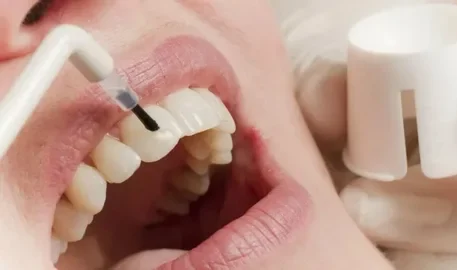
Professional (In-Office) Fluoride Treatment Dentists apply fluoride directly to the teeth in the form of a highly concentrated gel, foam, varnish, or rinse. Fluoride varnish — the most commonly used form today — is painted directly onto the tooth surfaces using a small brush. Foam and gel treatments are applied using a mouth tray that fits over the teeth. The entire procedure takes only a few minutes and is completely painless. Professional treatments provide deeper, longer-lasting protection than anything available for home use.
At-Home Fluoride Options At-home fluoride products — including fluoride toothpaste, mouthwashes, and prescription fluoride gels — are valuable supplements to professional care, but they are not substitutes. At-home fluoride toothpaste typically costs $3 to $7 per tube, fluoride mouthwashes run $5 to $15, and at-home fluoride tray kits cost $7 to $40. For patients at high risk of decay, dentists may prescribe a stronger at-home fluoride gel to use between professional visits. Both professional and at-home fluoride work best together, not as replacements for each other.
Key Benefits of Professional Fluoride Treatment
Professional fluoride treatment is widely recognized as one of the most cost-effective tools in preventive dentistry. Here’s what it can do for you:
Strengthens Tooth Enamel Fluoride reinforces the mineral structure of tooth enamel, making it significantly more resistant to acid attacks from bacteria and the foods and drinks you consume daily. Stronger enamel means fewer cavities and less sensitivity over time.
Prevents and Reverses Early Tooth Decay In the early stages of decay — before a cavity has fully formed — fluoride can stop and even reverse the damage by remineralizing weakened areas of enamel. Early signs of decay such as white spot lesions can be reversed with timely fluoride application, potentially saving you from needing a filling.
Reduces Cavity Risk Significantly Research consistently supports the effectiveness of professional fluoride treatments. Children and adolescents who received fluoride treatments for one year were found to be 43 percent less likely to have tooth decay and cavities. The protective effect extends to adults as well, particularly those at elevated risk.
Protects Against Sensitivity Fluoride treatment helps seal exposed dentinal tubules — the microscopic channels in teeth that cause sensitivity when exposed. Patients who experience sensitivity to hot, cold, or sweet foods often find relief after fluoride treatments.
Saves Money Long-Term This is one of the most compelling arguments for regular fluoride treatment. Consider the math: a professional fluoride treatment costs $20 to $50, while a single dental filling can cost $150 to $400 or more. Root canals, crowns, and other restorative procedures are far more expensive still. Investing in preventive fluoride treatment is one of the smartest financial decisions you can make for your long-term dental health.
Who Should Get Fluoride Treatment?
A common misconception is that fluoride treatment is only for children. In reality, fluoride benefits people of all ages — and certain adults are at particularly high risk and stand to gain the most from regular professional treatments.
Children and Adolescents The American Dental Association (ADA) recommends that children start fluoride treatments as soon as their first teeth appear, usually around six months of age. The earlier children are exposed to fluoride, the less likely they are to develop cavities. Children’s fluoride treatments are typically fully covered by dental insurance as part of preventive care.
Adults at Higher Risk Adults who benefit most from professional fluoride treatments include those who:
- Experience frequent cavities or have a history of tooth decay
- Have dry mouth (often caused by medications, medical conditions, or radiation therapy), which reduces saliva’s natural ability to neutralize acids
- Have gum recession that exposes the softer root surfaces of teeth, which are more vulnerable to decay
- Wear braces or other orthodontic appliances that make thorough cleaning more difficult
- Have crowns, bridges, or other restorations near the gum line
- Consume a diet high in sugar or acidic foods and beverages
- Have weak or thin enamel due to genetics or acid erosion
Even adults without specific risk factors benefit from fluoride treatment as a routine part of their twice-yearly dental cleaning.
What to Expect During a Fluoride Treatment
If you’ve never had a professional fluoride treatment before, the process is remarkably simple and quick.
Before the Treatment Your dentist or hygienist may ask you to avoid eating or drinking for 30 minutes before the procedure, as food residue can interfere with fluoride absorption. They will also review your dental and medical history to choose the most appropriate fluoride formulation for your needs.
During the Treatment The fluoride is applied directly to the surfaces of your teeth using a small brush (for varnish) or a fitted mouth tray (for gel or foam). The application takes only a few minutes — often just 1 to 4 minutes — and is entirely painless. You may notice a slightly sticky or coated feeling on your teeth if a varnish is used, which is completely normal and will disappear within a day or so.
After the Treatment Following the application, you’ll be advised to avoid eating or drinking for at least 30 minutes to allow the fluoride to fully absorb into the enamel. You should also avoid brushing or flossing for at least 4 to 6 hours after treatment, and steer clear of hot foods and beverages, alcohol-based products, and hard or sticky foods for the rest of the day.
How Much Does Fluoride Treatment Cost in 2026?
Professional fluoride treatment is one of the most affordable dental procedures available. Here’s a clear breakdown of current costs:
- In-office fluoride treatment: $20–$50 per visit
- Fluoride varnish (most common form): approximately $30–$35
- At-home fluoride toothpaste: $3–$7 per tube
- At-home fluoride mouthwash: $5–$15
- At-home fluoride tray kits: $7–$40
Insurance Coverage Dental insurance typically covers fluoride treatments in full for children as part of preventive care. For adults, coverage varies by plan — some plans cover it fully, others partially, and some classify it as optional. Adults without coverage can generally expect to pay $20 to $50 out of pocket per treatment. Given the cost of a single cavity filling ($150–$400+), this is a highly cost-effective investment.
How Often Should You Get Fluoride Treatment? The ADA recommends a professional fluoride treatment every 3, 6, or 12 months depending on your individual oral health and risk level. Most patients benefit from fluoride at each bi-annual dental cleaning. If you’re at higher risk for decay, your dentist may recommend more frequent applications or prescribe a supplemental at-home fluoride product.
How to Find a Fluoride Treatment Provider Near You
Finding a dentist who offers fluoride treatment near you is straightforward — virtually every general dentistry and family dental practice provides this service as a standard part of preventive care.
Search Online Searching “fluoride treatment near me” or “preventive dentist near me” on Google or Yelp will pull up local dental offices with ratings, hours, and contact information. Look for practices that emphasize preventive care and offer fluoride treatment as part of their routine cleaning appointments.
Use Dental Directories Platforms like Zocdoc, Healthgrades, and the ADA’s Find-a-Dentist tool allow you to search for local dentists by specialty, insurance acceptance, and patient reviews. These platforms make it easy to compare providers and book appointments online.
Ask About Bundled Services Many dental practices offer fluoride treatment as part of a bundled cleaning and exam package. Asking about this when booking your appointment can help you save money and ensure you receive the full benefit of preventive care in a single visit.
Check Insurance Coverage First Before your appointment, call your insurance provider to confirm whether fluoride treatment is covered under your plan and whether there are any age restrictions or frequency limitations. This helps you avoid unexpected out-of-pocket costs.
Final Thoughts
Fluoride treatment is one of the easiest, quickest, and most affordable ways to protect your teeth and your long-term dental health. Whether you’re scheduling your child’s first dental visit or adding preventive care to your own routine, a professional fluoride treatment near you is a small investment that pays enormous dividends — in the form of stronger enamel, fewer cavities, and significant savings on future dental work.