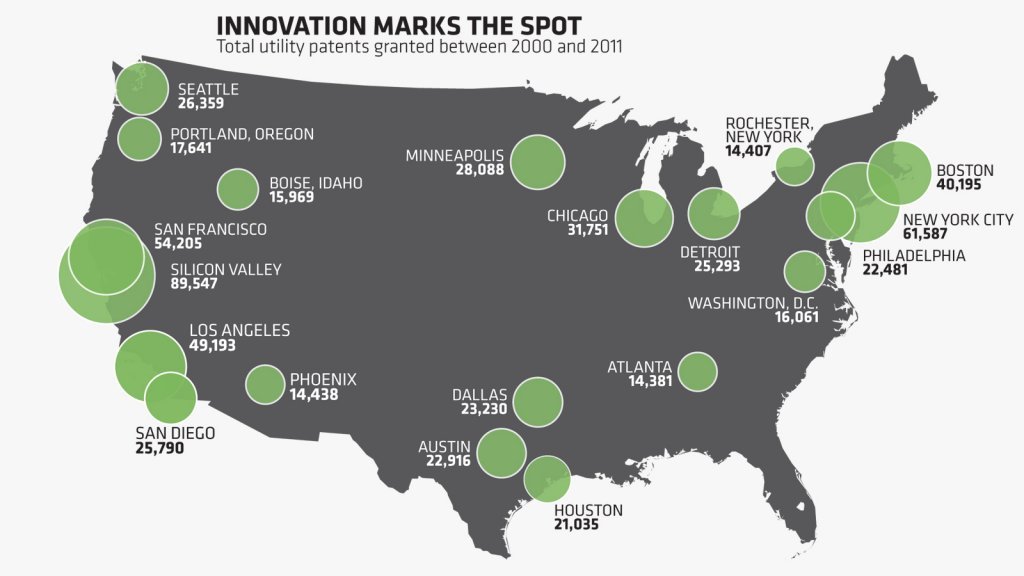
California has long been the world’s most powerful engine of technological innovation. From the sun-drenched corridors of Silicon Valley to the research labs of Berkeley and Stanford, the Golden State continues to define what the future looks like — not just for America, but for the entire world. With a GDP surpassing $4 trillion, California ranks as the world’s fifth-largest economy, and its leadership in technology is a core reason why. So, what technology innovations happened in California — especially in recent years? This article explores the most significant breakthroughs across artificial intelligence, electric vehicles, clean energy, quantum computing, fusion energy, and digital government.
California as the Global Hub of Technology
Before diving into specific innovations, it is important to understand just how dominant California’s tech ecosystem is. California is home to three of the four companies that have passed the $3 trillion valuation mark — Google, Apple, and Nvidia — all of which are deeply involved in AI development and have created hundreds of thousands of jobs. In 2024, 15.7% of all U.S. AI job postings were in California, ranking first by state, well ahead of Texas at 8.8% and New York at 5.8%, according to the 2025 Stanford AI Index. Furthermore, in 2024, more than half of global venture capital funding for AI and machine learning startups went to companies in the Bay Area alone.
The state also holds 33 of the top 50 privately held AI companies around the globe, cementing its position as the undisputed birthplace and capital of modern technology.
1. Artificial Intelligence: Leading the World
Perhaps no technology innovation in California has been more impactful in recent years than artificial intelligence. California has moved aggressively to both lead and regulate the AI industry. In late 2025, Governor Newsom signed Senate Bill 53, the Transparency in Frontier Artificial Intelligence Act (TFAIA), establishing new requirements for frontier AI developers around transparency, safety, and accountability. The law also created a new consortium called CalCompute, which aims to advance the development and deployment of artificial intelligence that is safe, ethical, equitable, and sustainable by fostering research and innovation.
Beyond regulation, California has integrated AI directly into state government operations. The California Department of Technology launched a new AI tool called Poppy, built on generative AI large language models and specifically tailored for state government use, with over 20 state departments already involved in its development and testing. The state has also developed over 20 trainings on AI for state employees, including a five-course AI “certificate” program and AI boot camps, in collaboration with UC Davis, Sacramento State, and Cisco.
2. Electric Vehicles: Crossing the 2.5 Million Milestone
California’s electric vehicle (EV) revolution is one of the most remarkable technology innovations in the state’s history. In 2025, California surpassed 2.5 million cumulative new zero-emission vehicle (ZEV) sales — a monumental milestone. Since the end of 2019, cumulative new ZEV sales in California alone have grown over 300%, driven by effective clean transportation policy and various ZEV incentives.
In 2024, new battery electric and plug-in hybrid vehicles accounted for 25.5% of total new vehicles registered in California. The state has also built the most extensive EV charging network in the country, with over 200,000 public and shared private EV charging stations throughout the state, in addition to an estimated 800,000 EV chargers installed in California homes.
California is also a testing ground for autonomous EV robotaxis — a futuristic transportation model that could redefine urban mobility. Los Angeles already has self-driving taxis operating through companies like Waymo and Cruise. Early feasibility studies are also underway for the installation of under-road-surface EV chargers for electric semi-trucks from the Port of Long Beach, innovations that would reduce on-route charging time and use less land due to their subterranean nature. The California Air Resources Board (CARB) projects that California will have 12.5 million registered EVs by 2035.
3. Clean and Renewable Energy: Record-Breaking Progress
California’s clean energy transformation is another landmark area of technological innovation. For the first time in history, electricity generation from renewable sources and large hydroelectric power in 2024 accounted for over half — 52.3% — of the state’s total power mix. Meanwhile, generation from fossil fuels fell to 36.3% in 2024, the lowest level ever recorded. Solar and wind are the largest renewable sources, making up 21.3% and 11.9% respectively of the state’s total power mix.
California has approved a $1.4 billion investment plan to expand EV charging and hydrogen fueling infrastructure, resulting in nearly 17,000 new light-duty chargers statewide. The state is also a world leader in solar energy and battery storage, with its clean energy policies consistently driving down emissions across the transportation and industrial sectors.
4. Quantum Computing: Claiming the Frontier
One of the most exciting recent technology innovations in California is the state’s aggressive push into quantum computing. In October 2025, Governor Newsom signed Assembly Bill 940 into law, announcing new funding to establish a unified strategy to grow the quantum technology industry. California is already home to both National Science Foundation and U.S. Department of Energy quantum federal research centers — two of the most important quantum hubs in the country.
An additional $4 million in state funding was set aside for quantum research and innovation as part of California’s 2025–2026 budget. Quantum computing has the potential to solve equations in mere minutes that would take existing computers thousands of years to complete, enabling enormous advances in medication discovery, artificial intelligence, and cryptography. Quantum technologies are also becoming essential for various emerging applications, including encryption and advanced scientific research.
5. Fusion Energy: Powering the Future
Alongside quantum computing, California is also staking its claim in fusion energy — one of the most transformative potential technologies in human history. Fusion occurs when two atoms slam together to form a heavier atom, releasing a tremendous amount of energy — the same process that powers the sun. California signed Senate Bill 80, creating the Fusion Research and Development Innovation Initiative, which distributes $5 million toward advancing research and development into fusion energy.
The goal is ambitious: delivering the world’s first fusion energy pilot project in California by the 2040s, to help achieve the state’s 100% clean electricity target by 2045. Both quantum and fusion are listed as priority sectors under the California Jobs First Economic Blueprint, with the state leading the way in research, talent development, and new discoveries.
6. Digital Government and Broadband Innovation
California’s technology innovations are not limited to the private sector. In 2024, California achieved first place for “Leadership” in the Digital States Survey by the Center for Digital Government, earning an ‘A’ grade — joining a select group of top states excelling in digital technology. The state’s Generative AI initiatives are revolutionizing how government interacts with residents, making services more efficient and personalized.
California is also bridging the digital divide through the Middle-Mile Broadband Initiative (MMBI), expanding high-speed internet access to underserved communities across the state. The California Department of Technology has launched emerging technology fellowship programs with the University of California’s CITRIS and with Stanford’s McCoy Family Center for Ethics in Society, building a pipeline of public sector AI leaders.
7. The Road Ahead
California’s innovation story is far from over. The state continues to lead in key sectors such as advanced manufacturing, clean energy, life sciences, aerospace, and digital technology, while investing heavily in infrastructure, workforce development, and sustainability. With new investments in artificial intelligence, quantum computing, fusion energy, and digital equity, California is positioning itself as a global leader in emerging technologies for decades to come.
The state’s unique combination of world-class universities, deep venture capital networks, a culture of risk-taking, and forward-thinking policy creates an environment where technology innovation doesn’t just happen — it thrives. From the first personal computers to the rise of generative AI, from the birth of the internet to autonomous electric vehicles, California has always been where the future begins.
Conclusion
So, what technology innovations happened in California? The answer spans an extraordinary range: from AI regulation and deployment to record-breaking EV adoption, from clean energy milestones to quantum computing legislation, and from fusion energy research to cutting-edge digital government services. California is not just participating in the global technology revolution — it is leading it. As the state continues to invest in emerging technologies and the talent needed to develop them, its position as the world’s innovation capital looks stronger than ever.