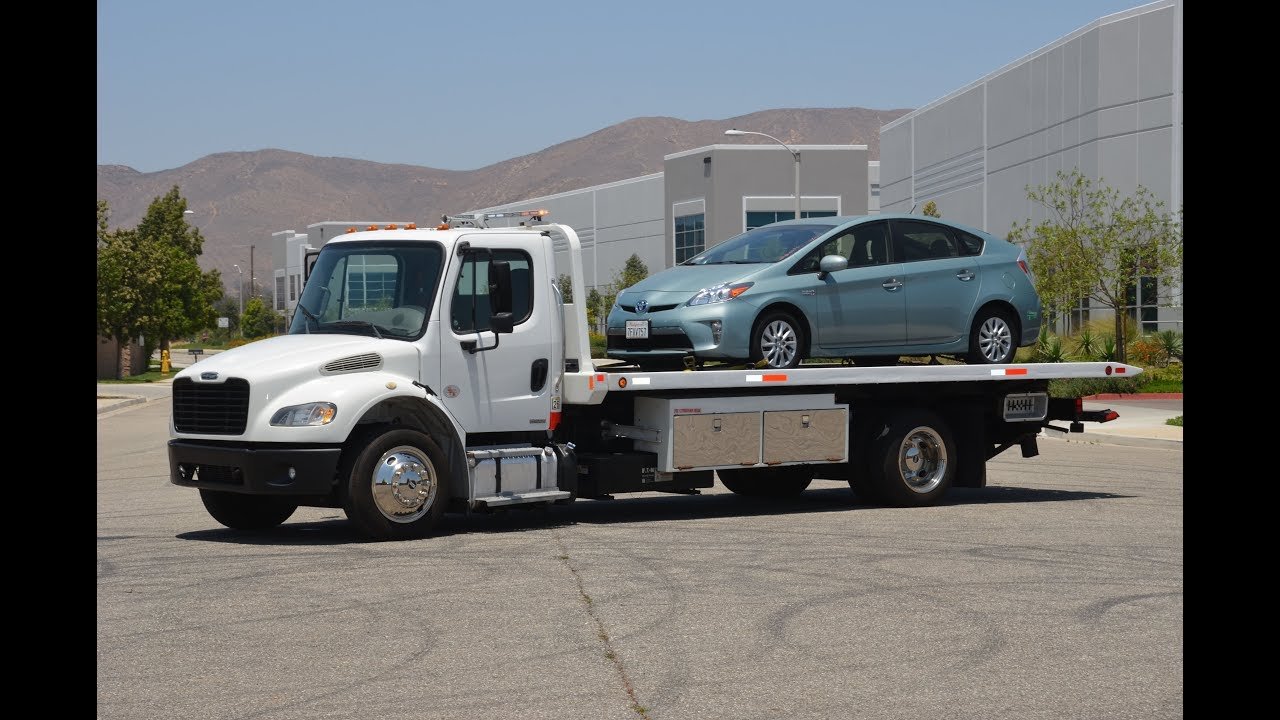
Nobody plans to need a tow truck. One moment you’re driving normally, and the next you’re coasting to the shoulder with your hazard lights on, wondering what to do next. Whether it’s a dead engine, a blown tire that can’t be changed roadside, a fender bender, or a battery that finally gave up, knowing how to find a reliable tow truck near you — and what to expect when one arrives — can turn a genuinely stressful situation into a manageable one. Here’s everything you need to know before that moment comes.
Do You Actually Need a Tow Truck?
Before you call for a tow, it’s worth asking whether you actually need one. Towing and roadside assistance are two distinct services, and confusing them can cost you money and time. Roadside assistance is designed for problems that can be fixed on the spot — a flat tire with a usable spare, a dead battery that needs a jump-start, a lockout, or an empty gas tank. Towing, by contrast, is for situations where your vehicle simply cannot be driven: engine failure, transmission damage, post-collision immobility, or a breakdown in a location where roadside repairs aren’t safe or feasible.
The practical distinction matters because roadside assistance is almost always faster and cheaper. A tire change or jump-start may only run $50–$100, whereas towing can cost $100–$300 for short distances and considerably more for longer hauls. If your car still runs but has a minor mechanical issue, roadside assistance can get you back on the road quickly. If the car cannot start, is unsafe to drive, or has major mechanical damage, a tow truck is the right call.
What to Do the Moment You Break Down
Safety comes first, always. If your vehicle breaks down or you’ve been in an accident, turn on your hazard lights immediately and move your car as far off the road as possible. If you’re on a busy highway, stay inside your vehicle with your seatbelt fastened until help arrives — the shoulder of a highway is one of the most dangerous places a person can stand. Once you’re in a safe position, note your exact location. Landmarks, highway exits, or GPS coordinates from your phone will help a tow truck arrive faster and reduce the chance of miscommunication with dispatch.
Only then should you start searching for a tow truck near you. A quick Google Maps search for “tow truck near me” with your location enabled will surface local options with reviews and contact information. If you have roadside assistance coverage through your insurance or a membership like AAA, call that number first — they often have preferred providers with faster response times and can coordinate the tow on your behalf.
Understanding Tow Truck Types
Not all tow trucks are the same, and the type that shows up matters for your vehicle’s safety. The three most common are flatbed trucks, wheel-lift trucks, and hook-and-chain trucks.
A flatbed tow truck is considered the safest option for most vehicles. Since the entire car is lifted onto a flat platform, there’s no contact with the road and no risk of damage to the drivetrain or wheels. Flatbed towing is typically more expensive than other methods, but it’s the right choice for luxury vehicles, all-wheel-drive cars, and — critically — electric vehicles.
A wheel-lift truck uses a metal yoke to lift either the front or rear wheels off the ground while the other two wheels remain on the road. It’s a more affordable option suited for short-distance towing of standard front- or rear-wheel-drive vehicles. Hook-and-chain trucks, once common, are largely obsolete for passenger vehicles because the chains can scratch the exterior and stress the frame. Most reputable towing companies no longer use them for standard cars.
A Critical Note for Electric Vehicle Owners
If you drive an electric vehicle, the rules of towing change significantly. Most EVs cannot be towed with wheels on the ground without risking serious damage. When EV wheels rotate during towing, the regenerative braking system generates electricity that can damage battery management systems and electronic components — repairs that can cost $5,000 to $15,000. Flatbed towing is not just recommended for EVs; for most models, it’s mandatory.
Manufacturers including Tesla, BMW, Audi, and Mercedes explicitly void powertrain warranties when improper towing methods damage electrical or drivetrain components. If you drive an EV, always specify that you need a flatbed when you call for a tow, and don’t allow a driver who shows up with only a wheel-lift truck to hook up your vehicle. It’s worth waiting longer for the right equipment than paying for expensive repairs later.
Some EVs also have a dedicated “Transport Mode” — Tesla’s is a well-known example — that releases the parking brake and adjusts stability control to allow for safer loading onto a flatbed. Check your owner’s manual before you’re in an emergency so you know what steps to take.
What Does a Tow Truck Cost?
Towing prices are not federally regulated in the United States, and rates vary widely by location, company, time of day, and the type of vehicle being towed. That said, there are useful benchmarks. Most towing companies charge a base hookup fee of $35–$100, plus a per-mile rate that typically falls between $2.50 and $7.00. Urban areas with more competition tend toward the lower end of that range, while rural areas where trucks travel farther to reach you typically charge more.
For a standard 10-mile tow of a compact car, expect to pay $75–$125 in most markets. A medium-distance tow of 20–50 miles generally runs $150–$300. After-hours, weekend, and holiday calls typically carry surcharges of 20–50% over standard daytime rates, so a 2 a.m. breakdown on a Saturday will cost meaningfully more than the same tow on a Tuesday afternoon.
If you drive an SUV, truck, or EV, expect a premium. Heavier vehicles require stronger equipment, and flatbed service adds to the base rate. A 20–30% premium over a comparable gas-powered sedan is a reasonable expectation for EV towing.
How to Avoid Towing Scams
Unfortunately, the towing industry has a well-documented problem with predatory operators who take advantage of drivers during vulnerable moments. The most common schemes include bait-and-switch pricing — a low quote over the phone followed by dramatically higher charges once your car is loaded — and “bandit” or unsolicited towing, where operators monitor accident scenes or busy intersections and pressure drivers into using their services before they’ve had a chance to make a decision.
Some tow truck drivers may arrive at accident scenes unsolicited and pressure you into letting them take your vehicle. They might rush paperwork, avoid answering questions, or refuse to give pricing information upfront. The rule of thumb is simple: if you didn’t call them, don’t use them. Legitimate towing services wait for police dispatches or customer calls before responding.
To protect yourself, always request a detailed written estimate before any service begins. Ask for the base hookup fee, the per-mile rate, and any additional charges that might apply. Look for clearly marked trucks with a visible company name, phone number, and license. If possible, look up the company on Google while you’re waiting — reputable businesses will have customer reviews and a verifiable address. Never sign a blank invoice or any agreement where the terms aren’t clearly spelled out.
Coverage That Can Save You Money
The single best financial protection against an unexpected tow bill is having coverage before you need it. Standard auto insurance typically does not include towing by default, but a roadside assistance add-on — usually $5–$30 per year through your insurer — will cover tows of 5–15 miles at no additional cost. AAA membership offers more generous mileage: the Classic tier covers 5 miles per tow, Plus covers 100 miles, and Premier covers up to 200 miles.
Some credit cards also include roadside assistance benefits that many cardholders never use. Review your policy, your memberships, and your credit card benefits now — not on the side of the road at night when you’re stressed and short on time.
The Preparation That Makes All the Difference
The drivers who handle breakdowns best are the ones who thought about it before it happened. Save the number of a well-reviewed local towing company in your phone contacts. Know what roadside assistance coverage you have and what number to call. Keep your vehicle registration and insurance documents accessible — towing companies require proof of ownership and an authorization signature before they can legally move your vehicle. And if you drive an EV, keep your owner’s manual handy and know whether your vehicle has a Transport Mode.
A breakdown is never convenient, but it doesn’t have to become a disaster. The right information, the right coverage, and a moment of calm decision-making are usually all it takes to get from the shoulder of the road to a repair shop without the situation getting worse.