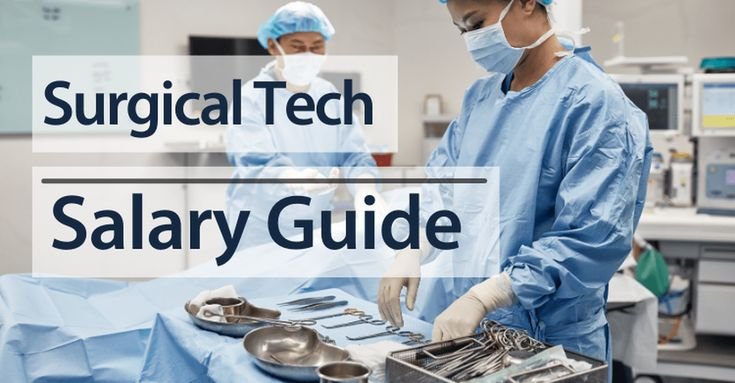
A surgical technologist — also known as a scrub tech, OR tech, or operating room technician — is a vital member of the surgical team. Surgical technologists are the first people to enter the operating room before a surgery. They prepare and sterilize the location and lay out all needed equipment, taking a careful count of everything being used. Once everything is sterile and prepared, the surgical tech acts as an aid for the surgeon and surgical assistant.
A surgical technologist is responsible for preparing the operating room, sterilizing instruments, arranging supplies, and ensuring the equipment functions properly. During surgery, they assist the surgical team by passing instruments, maintaining a sterile environment, and managing the sterile field.
After the procedure, surgical techs count every tool and device used once again to ensure nothing was left inside the patient. They may also help with sutures and to disinfect the incision site, and help with the proper disposal of all gauzes, drapes, and syringes.
Why Pursue a Career as a Surgical Tech in 2026?
Strong Job Outlook
The demand for surgical technologists is growing steadily. The Bureau of Labor Statistics projects 4.5% employment growth for surgical technologists between 2024 and 2034, with an estimated 5,200 jobs expected to open up in that period. Even more encouragingly, the median annual wage for surgical technologists hit $62,830 in May 2024, with an estimated 8,700 job openings projected each year over the next decade.
Meaningful Work
Working as a surgical technologist allows individuals to make a meaningful impact on patients’ lives. By playing a crucial role in surgical procedures, surgical technologists contribute to improving patients’ health outcomes and quality of life. They directly assist in life-saving surgeries and help patients on their path to recovery.
Accessible Entry Point into Healthcare
Pursuing a career as a surgical technologist provides a pathway to enter the healthcare industry without the extensive time and financial commitment required for other medical professions, like becoming a doctor or pursuing a degree in nursing. In fact, surgical technologists rank among the highest-paying jobs without a degree.
What Do Surgical Techs Do Day-to-Day?
Surgical tech responsibilities span the entire perioperative process:
Before Surgery:
Before an operation, surgical technologists may position the patient on the table, cover them with drapes, and prepare medications and sterile solutions. These health care workers may find themselves handing over the scalpel for incisions or moving tissue out of the surgeon’s view with retractors. They are also tasked with keeping the room sterile and counting tools.
Before an operation, surgical technologists may position the patient on the table, cover them with drapes, and prepare medications and sterile solutions. These health care workers may find themselves handing over the scalpel for incisions or moving tissue out of the surgeon’s view with retractors. They are also tasked with keeping the room sterile and counting tools.
During Surgery:
In their assisting role, surgical technologists act as the surgeon’s right hand during operations, directly attending to the surgeon’s needs and perhaps suctioning incisions or suturing wounds.
In their assisting role, surgical technologists act as the surgeon’s right hand during operations, directly attending to the surgeon’s needs and perhaps suctioning incisions or suturing wounds.
After Surgery:
After procedures, surgical technologists may transfer patients to the recovery room and restock the operating room.
After procedures, surgical technologists may transfer patients to the recovery room and restock the operating room.
Surgical Tech Salary: How Much Can You Earn?
Surgical technologists made a median salary of $62,830 in 2024. The best-paid 25% made $77,140 that year, while the lowest-paid 25% made $51,740.
Earnings vary significantly based on specialization and work setting. Surgical techs working in hospitals or specialized surgical centers often earn higher wages, especially if they have advanced skills or certifications such as the Certified Surgical Technologist (CST). At the top end, the highest-paid 10% of surgical techs earned more than $102,390 per year, according to the Bureau of Labor Statistics.
For those interested in travel assignments, travel surgical techs can make over $100,000 per year if they can consistently find contracts.
Types of Surgical Tech Jobs
Surgical technology is not a one-size-fits-all career. There are several work arrangements and specializations to consider:
By Work Setting
- Hospitals — The most common setting, offering full-time, part-time, and per diem roles
- Ambulatory Surgery Centers (ASCs) — Outpatient facilities with growing demand
- Physician Offices — Often the highest-paying setting for experienced techs
- Military / VA Facilities — Stable government positions with strong benefits
By Employment Type
Travel contracts offer short-term assignments with great pay and benefits. Per diem positions provide flexible shifts you can pick up at facilities near you. Permanent roles offer long-term staff positions with benefits offered by the facility.
By Specialization
Surgical techs can advance their careers by specializing in high-demand surgical areas such as:
- Cardiovascular / CVOR — Assisting with open-heart and vascular procedures
- Orthopedics — Joint replacements, spine surgery, and trauma cases
- Neurosurgery — Brain and spinal cord procedures
- Robotic Surgery — Operating advanced systems like the Mako Surgical System
- OB/GYN — Labor, delivery, and gynecological procedures
A surgical technologist career offers opportunities for professional development and advancement. Technologists can choose to specialize in specific surgical areas, such as orthopedics or cardiovascular surgery, by gaining additional knowledge and experience.
How to Become a Surgical Tech: Education Requirements
Step 1: Complete an Accredited Program
Traditional programs take 1–2 years, while accelerated bootcamps can prepare you in as little as 16 weeks. The timeline depends on your chosen program format and whether you’re studying full-time or part-time.
Becoming a surgical tech requires around 60 credit hours of didactic classwork and one year of clinical, hands-on experience. Most programs culminate in an Associate of Applied Science (AAS) degree.
Step 2: Obtain Certification
You can earn a certification as a surgical technologist by completing an education course and passing a certification exam. The most common certification exams are the Certified Surgical Technologist (CST) and the Tech in Surgery – Certified (TS-C).
CST Certification (NBSTSA):
The Certified Surgical Technologist (CST) credential from the National Board of Surgical Technology and Surgical Assisting (NBSTSA) is the standard certification in the field. It requires graduating from a CAAHEP or ABHES-accredited program. To pass the CST test, candidates need to answer 98 of the 150 scored questions correctly. Candidates who do not pass the CST exam may retake it up to three times in a calendar year with no waiting period.
The Certified Surgical Technologist (CST) credential from the National Board of Surgical Technology and Surgical Assisting (NBSTSA) is the standard certification in the field. It requires graduating from a CAAHEP or ABHES-accredited program. To pass the CST test, candidates need to answer 98 of the 150 scored questions correctly. Candidates who do not pass the CST exam may retake it up to three times in a calendar year with no waiting period.
Maintaining Your Certification:
Certification is renewed every two years by passing a certification exam or by providing proof of approved continuing education programs. To retain CST accreditation with CE, candidates must earn 30 credits every two years.
Certification is renewed every two years by passing a certification exam or by providing proof of approved continuing education programs. To retain CST accreditation with CE, candidates must earn 30 credits every two years.
Is Certification Required?
Whether certification is required depends on your state. Fifteen states legally require certification before you can work. In states where it’s optional, most hospitals still prefer or require certified candidates.
Key Skills for Surgical Tech Jobs
Surgical technologists require a balance of technical and soft skills. Employers commonly look for:
- Aseptic technique — Maintaining a sterile field is non-negotiable
- Attention to detail — Because they’re responsible for maintaining a sterile field and surgical instruments, surgical technologists need to be meticulous in their daily activities.
- Physical stamina — Surgical technologists may spend long hours standing attentively throughout a procedure, so they must have the stamina to stay on their feet for extended periods.
- Teamwork and communication — Working closely with surgeons, nurses, and anesthesiologists
- Medical terminology — Essential for clear communication in fast-paced environments
Job Outlook and Growth Drivers
Growth in surgical tech jobs is driven by the rising demand for healthcare services and an expanding aging population, leading to more surgical procedures. Advances in medical technology and surgical techniques are also increasing the number of surgeries performed, which is expected to create higher demand for surgical technologists.
As of 2024, 141,000 surgical technologists were employed in the United States. With steady projected growth and thousands of annual job openings, the field offers strong stability for those entering or advancing in the profession.
Tips for Landing a Surgical Tech Job
- Get certified — Even where not legally required, CST or TS-C certification makes you a far more competitive candidate.
- Specialize — Skills in robotic surgery, cardiovascular, or orthopedic procedures can significantly boost your earning potential.
- Consider travel assignments — Travel surgical tech contracts offer higher pay and the chance to gain diverse clinical experience.
- Maintain your credentials — Keep your certification current through continuing education to stay competitive.
- Build your clinical network — Many surgical tech positions are filled through referrals and connections made during clinical rotations.
Final Thoughts
Surgical tech jobs offer a compelling combination of meaningful patient care, competitive pay, and strong job security — all without the decade-long educational investment required of surgeons or physicians. A career as a surgical technologist offers the chance to make a positive impact on patients’ lives and provides stability and job prospects. Whether you’re just starting out or looking to advance into a specialty, 2026 is an excellent time to pursue or grow a career in surgical technology.