Owning an RV is one of the most rewarding ways to travel — but it also means taking on the maintenance demands of both a vehicle and a home at the same time. Whether you’re dealing with a slide-out that won’t budge, a roof leak discovered mid-trip, or an air conditioner that quit on the hottest day of the summer, knowing where to turn for reliable RV repair near you can make the difference between a minor inconvenience and a ruined adventure. This guide covers everything you need to know about RV repair in 2026, from the most common issues and realistic costs to the difference between shop-based and mobile repair services.
Why RV Repairs Are in a Category of Their Own
Repairing an RV isn’t like taking a car to a mechanic or calling a plumber for your house — it’s both at once. A modern RV combines a complex mechanical drivetrain with a full suite of residential systems: plumbing, electrical, HVAC, appliances, slide-outs, awnings, and more. Each of these systems can and does fail independently, and diagnosing problems often requires a technician trained in multiple disciplines.
According to industry claims data, 30% of RVs will experience a major mechanical breakdown by their third year on the road, followed by approximately 80% by year five. That’s not a reason to avoid RV ownership — it’s a reason to understand what you’re working with and have a trusted repair resource lined up before you need it.
The Most Common RV Repairs in 2026
Understanding the most frequent failure points helps you catch problems early and budget appropriately. Here are the issues RV technicians see most often:
Roof Leaks and Water Damage Water damage is one of the most expensive and destructive problems an RV owner can face. Roof seams fail gradually — small cracks allow moisture to spread inside walls and ceilings long before the damage becomes visible. Rubber seals around vents, skylights, and edges shrink and harden over time, creating gaps that allow water intrusion. Catching seal failure early prevents mold, floor damage, and insulation loss. Roof repairs range from a few hundred dollars for minor sealant work to several thousand for membrane replacement or full roof restoration.
Slide-Out Failures Slide-outs are among the most common repair items for both motorhomes and towable trailers. These complex mechanisms involve motors, actuators, hydraulics, and seals — all of which can fail independently. Minor issues like corroded wires or leaky seals may cost a few hundred dollars to fix, while replacing a motor or realigning misaligned tracks can run $1,000 or more. Gear assembly repairs typically fall in the $200–$600 range.
Electrical System Problems Electrical problems are a leading cause of RV breakdowns. Battery failure is one of the most common reasons RVs lose power while parked, while low voltage can damage appliances and control boards over time. With the rise of solar panels and inverter systems in modern RVs, electrical issues have become increasingly complex. Replacing a power inverter or fixing generator issues can exceed $2,500, and larger electrical repairs involving rewiring or converter replacement can go higher.
Plumbing and Water System Issues RV plumbing takes a beating — it travels down the road at highway speeds, sits unused for months, and is subjected to freezing temperatures in winter. Water pumps fail, holding tanks develop cracks, valves break, and toilet components wear out. A simple leak might cost around $100 to fix, while replacing a water heater can cost over $1,000. Black tank repairs with parts and labor can run $1,500–$5,000 depending on severity.
Air Conditioning and HVAC Climate control is one of the most heavily used systems in any RV, and rooftop AC units take a particularly rough ride. Common issues include freezing coils, defective thermostats, control board failures, and electrical shorts. Minor repairs like cleaning coils or replacing filters are relatively inexpensive, but replacing an entire rooftop AC unit can cost $1,500–$8,400 depending on the unit and the RV.
Awnings Awning motors and mechanisms are frequent failure points, especially on towable trailers. A malfunctioning awning can sometimes prevent you from traveling until it’s repaired. Repair costs range from a few hundred dollars for motor or switch issues to $1,000 or more for full awning replacement.
Tires RV tires are often overlooked until it’s too late. Rubber degrades over time regardless of mileage — if your RV sits for extended periods, dry rot can set in even on low-mileage tires. RV tires range from $100 to $300 per tire depending on size and type, and a blowout at highway speed can cause significant additional damage to the RV body and undercarriage.
Engine and Transmission (Motorhomes) For motorhomes, engine and transmission failures are among the most expensive repairs an owner can face. Transmission and engine repairs range from $4,000 to $44,000 depending on severity and RV class. Replacing a diesel engine on a Class A motorhome can cost over $30,000 — which is why regular oil changes, fluid checks, and tune-ups are so critical for motorhome owners.
How Much Does RV Repair Cost in 2026?
RV repair costs vary enormously depending on the type of repair, the RV’s size and age, and whether you use a shop or mobile service. Here’s a general breakdown:
- Average RV repair cost (typical range): $600–$3,500 per service event
- Labor rates: $150–$225 per hour at most certified shops and mobile services
- Mobile service call minimums: $475–$500 (trip charge plus first hour) for on-site service
- Roof sealant/minor leak repair: $200–$800
- Slide-out repair: $200–$2,000+ depending on component
- Water heater replacement: $500–$1,500
- Air conditioning repair/replacement: $500–$8,400
- Electrical system repairs: $200–$2,500+
- Brake service: $400–$1,000+ per axle
- Engine/transmission overhaul: $4,000–$44,000
- Tire replacement: $100–$300 per tire
Several factors affect where your costs land: the type and age of your RV (motorhomes are generally more expensive to repair than towable trailers due to powertrain components), the availability of specialty parts, your geographic location, and whether the work is done in-shop or via mobile service.
Shop-Based vs. Mobile RV Repair: Which Is Right for You?
One of the first decisions you’ll face when your RV needs work is whether to bring it to a shop or call a mobile technician.
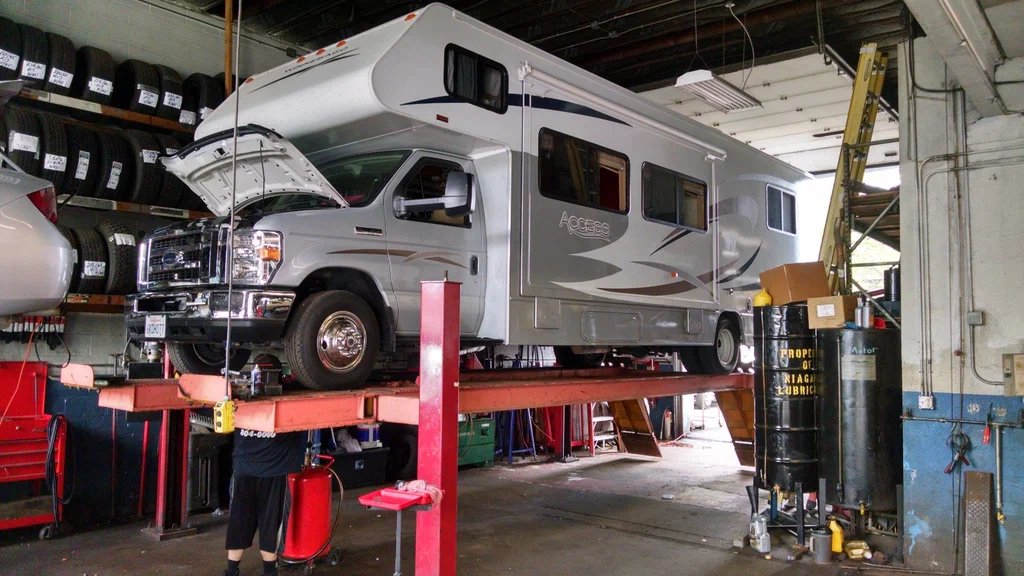
Shop-Based RV Repair A dedicated RV service center offers the most comprehensive capabilities — lifts, specialized tools, climate-controlled bays, and access to a full parts inventory. For major mechanical work (engine, transmission, suspension), structural repairs, or full roof replacement, a shop is typically the better choice. The trade-off is logistics: you need to drive or tow your RV to the facility, and wait times at busy shops can stretch to weeks during peak season.
Mobile RV Repair Mobile RV technicians come to your location — whether you’re at home, at a campground, or stranded roadside. This is ideal for most “house system” repairs: plumbing, electrical, appliances, slide-outs, awnings, and HVAC. Mobile service eliminates the hassle of towing and is often faster for straightforward repairs. Most mobile technicians arrive in a fully equipped van and can complete many repairs the same day. Mobile service does carry a trip charge on top of hourly labor, so it’s slightly more expensive for small jobs than walking into a shop.
For specialized services like engine work or complex structural repairs, in-shop service is typically recommended. For everything else, mobile repair is a convenient and increasingly popular option.
Preventive Maintenance: The Best RV Repair Is the One You Never Need
The most cost-effective approach to RV ownership is staying ahead of problems with regular maintenance. Key tasks to keep on your annual checklist:
- Inspect and reseal the roof every year — catching a small crack before it becomes water damage can save thousands
- Check all seals around windows, doors, vents, and slide-outs for cracking or shrinkage
- Service the water system seasonally — sanitize the freshwater tank each spring and winterize properly each fall
- Test the electrical system including batteries, converter, and shore power connections
- Inspect tires before every trip for cracks, bulges, and pressure — replace tires based on age as well as mileage
- Change engine oil and filters on schedule for motorhomes, even if mileage is low
- Lubricate and inspect slide-out mechanisms and replace seals as needed
Annual professional inspections by a certified RV technician are worth every dollar — they catch developing issues before they become emergency repairs, and they keep your warranty and insurance documentation current.
How to Find a Trusted RV Repair Service Near You
Finding a qualified RV repair technician takes a bit more effort than finding a general mechanic, but it’s worth doing right. Here’s how:
- Look for RVIA/RVDA certification — the Recreation Vehicle Industry Association and RV Dealers Association certify technicians in RV-specific systems; certified techs have verified training and expertise
- Search Google, Yelp, or RV forums for “RV repair near me” and filter by rating and review count — look for shops or mobile techs with strong reviews specifically from RV owners, not just general automotive customers
- Ask in RV owner communities — Facebook groups, Reddit’s r/GoRVing, and forums like iRV2 are excellent sources for local recommendations from experienced owners
- Check Camping World service centers for nationwide coverage, or seek out independent specialists for more personalized service
- Request a written estimate before authorizing any work, and confirm whether parts are billed separately from labor
- Ask about warranty on repairs — reputable shops and mobile techs stand behind their work with at least a 90-day labor warranty
When comparing options, don’t choose on price alone. RV systems are complex, and a misdiagnosed repair can cost far more in the long run than paying a certified technician to get it right the first time.
Is an RV Extended Warranty Worth It?
Given that nearly all RVs will require a major repair within the first eight years, many owners find that an extended warranty or service plan pays for itself. Plans from providers like Good Sam, Wholesale Warranties, and America’s RV Warranty cover the most expensive failure points — slide-outs, electrical systems, HVAC, plumbing, and powertrain components — and can save thousands when a major breakdown occurs. If you’re purchasing a used RV or approaching the end of your manufacturer’s warranty, it’s worth comparing plan options before your next big repair bill arrives.
With the right repair partner and a proactive maintenance routine, your RV can deliver years of reliable adventures. Start by identifying a certified technician or service center near you before you need one — because the best time to find a great RV repair shop is before you’re stranded.