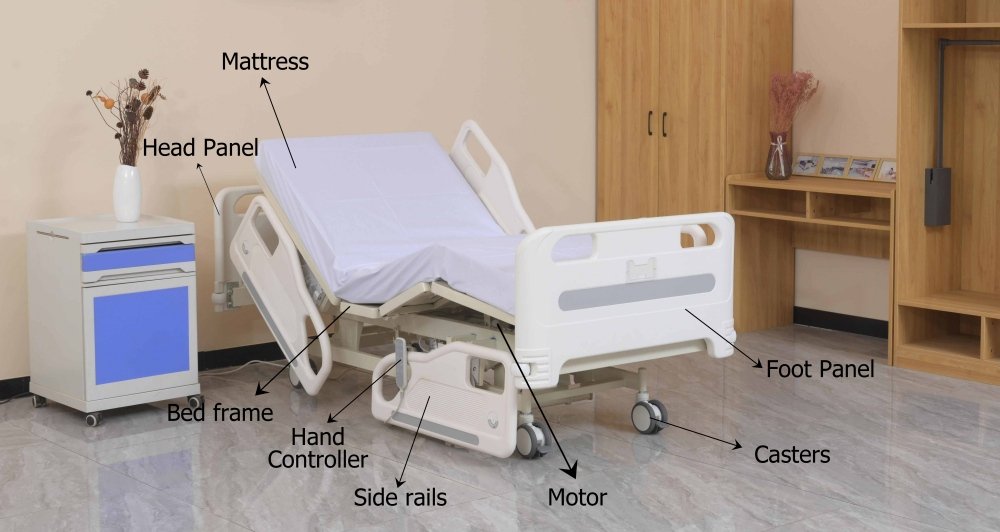
The hospital has long been the center of the healthcare universe. But that is rapidly changing. Driven by an aging global population, rising healthcare costs, and a surge in digital innovation, the future of medicine is increasingly being delivered where people feel most comfortable — at home. From artificial intelligence and wearable sensors to robotic assistants and smart home devices, technology is transforming home-based care from a limited alternative into a powerful, data-rich extension of clinical medicine.
The numbers tell a compelling story. According to McKinsey, up to $265 billion in healthcare services could shift from traditional clinical settings to home-based care by 2025. The U.S. home healthcare market, valued at $94.17 billion in 2022, is projected to reach $153.19 billion by 2029. And with the World Health Organization estimating that 1 in 6 people globally will be aged 60 or older by 2030, the demand for scalable, in-home healthcare solutions has never been more urgent.
The Market Forces Driving Home Care Technology
Several converging forces are accelerating the adoption of at-home healthcare technology. The COVID-19 pandemic was a turning point — it forced healthcare systems worldwide to rapidly expand virtual and remote care capabilities. According to a 2024 Deloitte report, digital health adoption rose 60% in the post-pandemic period, with remote patient monitoring (RPM) cited as the top investment area among healthcare organizations.
Patients themselves are also driving the shift. Aging adults overwhelmingly prefer to age in place rather than move to institutional settings. Meanwhile, hospital overcrowding, staffing shortages, and the high cost of inpatient care are pushing health systems to find sustainable alternatives. Home-based care offers a solution that benefits all stakeholders — patients receive personalized, comfortable care, while providers reduce overhead costs and free up critical hospital capacity.
Artificial Intelligence: The Brain Behind Home Care
Artificial intelligence is quickly becoming the most transformative force in at-home healthcare. AI-powered platforms can analyze continuous streams of biometric data collected from wearables and home sensors, identify patterns invisible to the human eye, and generate clinical alerts before a patient’s condition deteriorates.
Investment in AI-driven healthcare tools is accelerating at a remarkable pace. According to SVB’s 2025 Healthtech Report, AI in provider operations accounted for 44% of total healthtech investment in 2025 — up from just 19% in 2021. The impact is already being felt at the clinical level: a 2024 survey found that 75% of healthcare providers reported improved work efficiency after adopting ambient AI documentation tools, reducing the administrative burden on clinicians and allowing more time for patient-centered care.
AI is also enabling predictive care at home. Machine learning algorithms trained on patient history, real-time vitals, and population health data can now flag early warning signs of conditions like heart failure, COPD exacerbations, and diabetic complications — often days before symptoms become noticeable. This predictive capability is fundamentally shifting care from reactive to proactive.
Remote Patient Monitoring (RPM) and Wearables
Remote patient monitoring is one of the fastest-growing segments of home healthcare technology. The global RPM market was valued at $1.9 billion in 2025 and is projected to reach $5.5 billion by 2034, growing at a compound annual growth rate (CAGR) of 12%. The AI-integrated RPM segment alone is expected to surge from $2.53 billion in 2025 to $29.95 billion by 2035, reflecting a CAGR of 28.09%.
Modern wearables go far beyond step counters and heart rate monitors. Today’s devices can continuously track blood oxygen levels, electrocardiograms (ECG), blood glucose, respiratory rate, sleep stages, and even early signs of atrial fibrillation. Smartwatches, biosensor patches, and implantable monitors transmit this data in real time to care teams, enabling clinical-grade monitoring without requiring patients to leave their homes.
The results are striking. One health system using Biofourmis’ AI-guided RPM platform reported a 70% reduction in 30-day hospital readmissions and a 38% reduction in overall cost of care. These outcomes demonstrate that technology-enabled home monitoring is not just convenient — it is clinically superior in many cases.
Telehealth: From Pandemic Necessity to Standard of Care
Telehealth exploded during the pandemic and has since matured into a core component of modern healthcare delivery. Video consultations, asynchronous messaging, and digital check-ins allow patients to connect with physicians, specialists, and mental health professionals from their living rooms — eliminating travel barriers and reducing wait times.
The virtual care segment is expected to grow at 17.3% annually through 2028, reflecting its permanent integration into the healthcare landscape. Beyond convenience, telehealth is proving especially valuable for rural and underserved communities where specialist access is limited. Platforms now integrate directly with wearable devices and home monitoring equipment, meaning a physician conducting a virtual visit can simultaneously review a patient’s real-time vitals, recent ECG readings, and medication adherence data.
Smart Home Technology and Passive Monitoring
One of the most exciting frontiers in at-home healthcare is passive monitoring — using ambient sensors embedded in everyday household objects to collect health data without requiring any action from the patient. This approach is particularly valuable for elderly individuals or those with cognitive impairments who may struggle with wearable devices.
Sensors embedded in mattresses, furniture, bathroom fixtures, and flooring can detect gait changes, sleep patterns, falls, and physiological signals that indicate deteriorating health. Smart toilets are emerging as an unexpected but powerful diagnostic tool. A 2024 Stanford University study found that toilet-based sensors were able to detect colorectal cancer biomarkers with 87% sensitivity — a remarkable achievement for a completely passive, in-home screening method. Similar devices are being developed to detect early signs of heart failure, diabetes, and urinary tract infections through routine bodily waste analysis.
Robotics and Advanced In-Home Devices
Robotics is beginning to play a meaningful role in home-based care, particularly for patients with physical disabilities or those recovering from surgery. Robotic assistive devices can help patients with mobility, medication dispensing, physical therapy exercises, and even companionship. AI-powered voice assistants and care robots can remind patients to take medications, guide them through rehabilitation exercises, and alert caregivers if something seems wrong.
Medication management technology is also advancing rapidly. Smart pill dispensers with automated scheduling, dosage verification, and missed-dose alerts are reducing medication errors — one of the leading causes of preventable hospital readmissions. These devices can sync with pharmacy systems and electronic health records to ensure patients always have the right medications at the right time.
Data Security in the Age of Connected Home Care
As home care becomes more connected, data security becomes a critical concern. The proliferation of IoT devices, wearables, and telehealth platforms creates a complex web of sensitive health information that must be protected. According to IBM’s 2024 Cost of a Data Breach Report, healthcare has the highest average data breach cost of any industry at $10.93 million per incident.
Patient trust is also at stake. A Deloitte Insights survey found that 84% of patients want control over who accesses their health data. Healthcare organizations deploying home care technology must invest in end-to-end encryption, strong authentication protocols, and transparent data governance policies. Regulatory frameworks like HIPAA in the U.S. and GDPR in Europe provide baseline protections, but the rapidly evolving landscape of connected home devices demands continuous vigilance and updated security standards.
The Hospital-at-Home Model
Perhaps the boldest expression of technology-enabled home care is the Hospital-at-Home model — a care delivery approach that provides acute-level medical treatment in a patient’s home rather than a hospital inpatient unit. The Centers for Medicare & Medicaid Services (CMS) launched a formal Hospital-at-Home waiver program, and as of 2025, over 300 hospitals across the United States are actively delivering acute-level care at home under this model.
Internationally, the NHS in the United Kingdom has scaled its Virtual Wards program significantly, monitoring over 10,000 patients per day at home as of early 2025. These patients — many of whom would otherwise occupy hospital beds — receive continuous remote monitoring, daily virtual check-ins with clinical teams, and on-demand in-person support when needed. Early results show high patient satisfaction, reduced length of stay, and lower complication rates compared to traditional inpatient care.
Conclusion
The transformation of at-home healthcare is not a distant vision — it is happening right now, at scale, and with measurable results. Artificial intelligence, remote patient monitoring, telehealth, smart home sensors, robotics, and the Hospital-at-Home model are collectively redefining what it means to receive high-quality medical care. As these technologies mature and integrate more deeply with clinical workflows, the home will become not just a place of comfort, but a fully equipped, data-rich healthcare environment.
For patients, this means more autonomy, better outcomes, and care that fits around their lives. For providers, it means smarter resource allocation and the ability to reach more people more effectively. And for the healthcare system as a whole, it means a more sustainable, equitable, and human-centered future — one that starts at home.