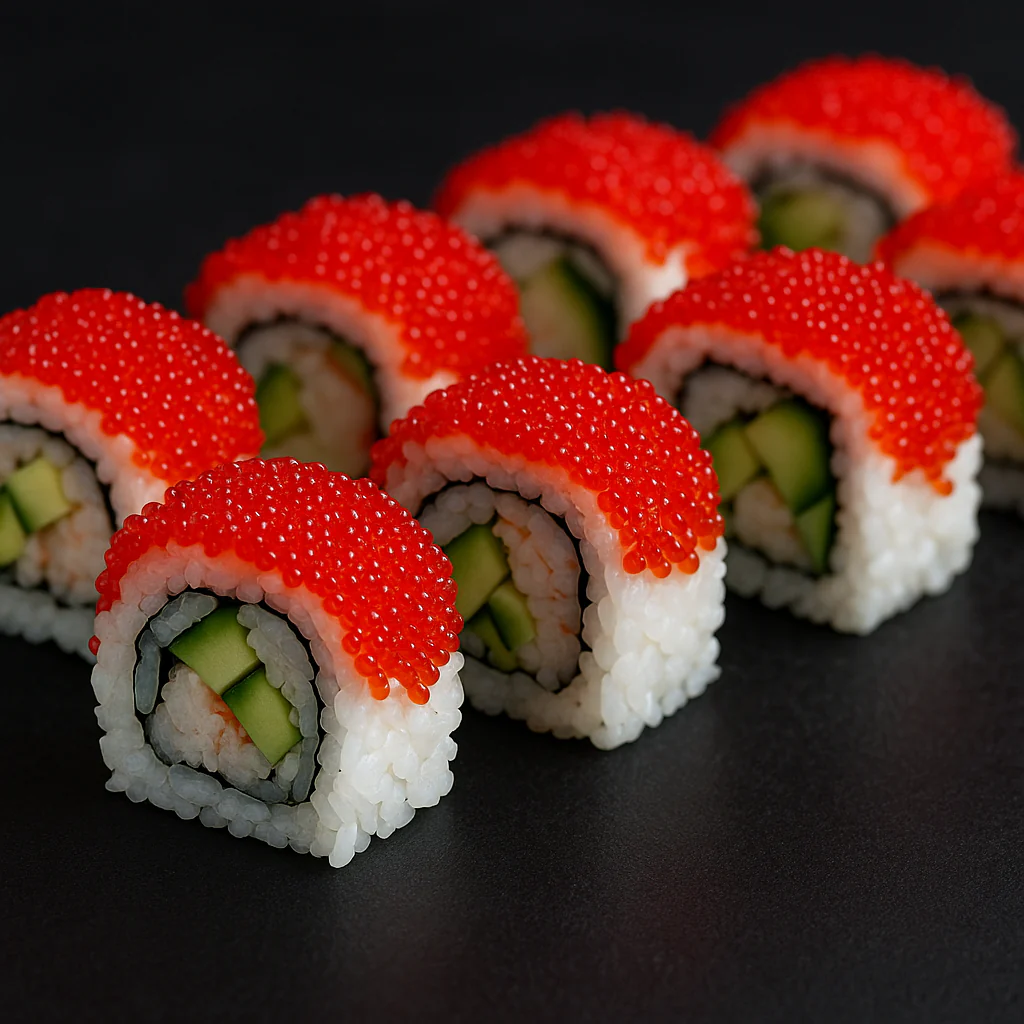
Japanese cuisine is renowned for its delicate flavors, meticulous preparation, and artistic presentation. Among its many treasures, tobiko stands out as a vibrant, flavorful, and visually stunning ingredient that plays a vital role in sushi and beyond. Often referred to as “flying fish roe,” tobiko is celebrated for its distinctive crunch, bright color, and subtle taste. In this article, we will explore the world of tobiko, its origins, culinary uses, nutritional value, and its influence on global gastronomy.
What is Tobiko?
Tobiko is the Japanese word for the roe (eggs) of the flying fish, a species found in tropical and subtropical waters. Unlike larger fish roe like salmon (ikura) or sturgeon caviar, tobiko is tiny—each egg measures about 0.5 to 0.8 millimeters in diameter. The natural color of tobiko ranges from bright orange to red, though it is often dyed to create a rainbow of hues, such as black (with squid ink), green (with wasabi), and yellow (with yuzu citrus).
The appeal of tobiko lies not only in its eye-catching appearance but also in its unique texture—a perfect balance of light crunch and subtle pop that enhances the eating experience. The flavor is mildly salty, slightly sweet, and imbued with a hint of smokiness, making tobiko a versatile ingredient in Japanese cuisine.
The Role of Tobiko in Sushi
Tobiko is perhaps best known as a popular topping for sushi rolls and nigiri. Its vivid color transforms even the simplest roll into a visual feast. Chefs use tobiko to add both flavor and texture, sprinkling it atop maki rolls, wrapping it around rice, or layering it inside uramaki (inside-out rolls).
One of the most famous sushi creations featuring tobiko is the California roll, where it is used to coat the exterior of the roll, adding both crunch and color. Tobiko is also a common addition to “Dragon Rolls,” “Rainbow Rolls,” and other fusion sushi recipes, often paired with creamy sauces, avocado, and tempura for a symphony of flavors.
Beyond sushi rolls, tobiko is used in gunkan maki, a “battleship” style sushi where seasoned rice is encircled by seaweed and topped with a generous mound of roe. The visual impact and delightful texture make tobiko a favorite among both traditionalists and those seeking innovative sushi experiences.
Varieties and Coloring of Tobiko
While the natural color of tobiko is a bright orange-red, chefs and producers often dye tobiko to create a spectrum of colors, each with its own subtle flavor profile and purpose:
- Orange Tobiko: The most common type, with a slightly sweet and salty flavor.
- Black Tobiko: Created using squid ink, it adds a dramatic flair and a mild, briny taste.
- Green Tobiko: Flavored with wasabi, imparting a gentle heat and vibrant color.
- Red Tobiko: Sometimes enhanced with beet juice or other natural dyes for a deeper hue.
- Yellow Tobiko: Infused with yuzu citrus, offering a floral and tangy note.
These variations allow chefs to customize the visual and flavor experience of their dishes, making tobiko an essential tool for creative presentation.
Tobiko vs. Other Fish Roe
In Japanese cuisine, there are several types of fish roe, each with distinct characteristics:
- Ikura: Salmon roe, much larger eggs with a robust, briny flavor and a soft texture.
- Masago: Capelin roe, smaller and more delicate, often used as a less expensive alternative to tobiko.
- Kazunoko: Herring roe, notable for its firm texture and used primarily in traditional New Year’s dishes.
Tobiko stands out for its crunch, size, and versatility. While masago is sometimes substituted for tobiko, connoisseurs can detect the subtle differences—the crunch of tobiko is more pronounced, and its flavor is cleaner and less fishy than masago.
Culinary Uses Beyond Sushi
While sushi is the most iconic use of tobiko, its culinary applications extend far beyond the sushi bar. Tobiko can be incorporated into salads, pasta dishes, and appetizers for an unexpected burst of color and flavor. Some chefs use tobiko as a garnish for ceviche, seafood tartare, or even scrambled eggs, elevating everyday dishes to gourmet status.
Tobiko’s resistance to high temperatures makes it suitable for both cold and hot dishes. When added to sauces or mayonnaise, it imparts a subtle crunch and a touch of umami. In fusion cuisine, tobiko appears in creative dishes such as tobiko-topped oysters, pizza, and even sushi burritos, demonstrating its adaptability and global appeal.
Nutritional Value and Health Benefits
Tobiko is not only a culinary delight but also a source of nutrition. Like many fish roes, tobiko is rich in protein, omega-3 fatty acids, and essential vitamins and minerals. It contains:
- Protein: Crucial for muscle growth and repair.
- Omega-3 fatty acids: Beneficial for heart health, cognitive function, and reducing inflammation.
- Vitamin B12: Important for energy metabolism and nervous system health.
- Selenium and phosphorus: Support immune function and bone health.
Tobiko is relatively low in calories and fat, making it an attractive addition to health-conscious diets. However, as with all seafood, moderation is advised due to potential sodium content and food allergies.
Sustainability and Ethical Considerations
With the growing popularity of sushi worldwide, sustainability has become an important issue in seafood sourcing. Flying fish are not currently considered endangered, and their roe is harvested in a manner that is generally less intensive than that of larger fish species. Nonetheless, responsible sourcing, transparency, and adherence to sustainable fishing practices are vital to protect marine ecosystems.
Many sushi restaurants and suppliers now prioritize traceability and sustainable harvesting methods, ensuring that tobiko is obtained in a way that minimizes environmental impact. Consumers interested in ethical dining can inquire about the origin of their tobiko and choose establishments committed to responsible sourcing.
Tobiko in Global Cuisine
As sushi has spread across the globe, tobiko has found its way into the culinary traditions of many countries. In the United States, Europe, and Australia, chefs experiment with tobiko in fusion dishes, combining Japanese techniques with local ingredients. The visual appeal and unique texture of tobiko make it a popular choice for upscale restaurants and creative home cooks alike.
Tobiko is now featured in dishes ranging from gourmet canapés to fusion tacos, reflecting its versatility and universal appeal. Its presence in international cuisine demonstrates the adaptability of traditional Japanese ingredients to new contexts and tastes.
Buying and Storing Tobiko
For home cooks and sushi enthusiasts, tobiko is widely available at Asian grocery stores and specialty seafood markets. It is typically sold refrigerated, either fresh or frozen. When purchasing tobiko, look for eggs that are glossy, plump, and free from strong odors.
Proper storage is essential to maintain freshness. Tobiko should be kept in the coldest part of the refrigerator and consumed within a few days of opening. Freezing is possible, but thawed tobiko should be used promptly for best texture and flavor.
Conclusion
Tobiko, the radiant roe of the flying fish, has become a symbol of elegance and innovation in Japanese cuisine. Its vivid color, crisp texture, and subtle flavor delight sushi lovers and inspire chefs around the world. Whether adorning a classic sushi roll or adding sparkle to a modern fusion dish, tobiko continues to capture imaginations and palates.
As diners become more adventurous and global influences shape culinary trends, tobiko’s role will only grow, embodying the spirit of Japanese gastronomy—where beauty, flavor, and tradition combine in every bite.