Abdul haye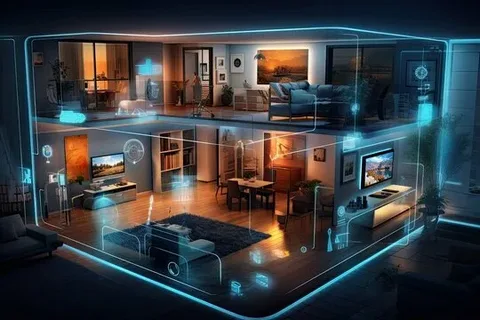
As we move into the 2030 ,Future Home Automation Ideas for 2035 is no longer a futuristic fantasy. What once felt like science fiction is rapidly becoming possible thanks to advances in AI, robotics, sensors, connectivity, and sustainability. By 2035, many homes will likely operate in ways that are far more adaptive, anticipatory, and integrated into daily life.
In this article, we explore what the Future Home Automation Ideas for 2035 might look like in 2035: key ideas, enabling technologies, benefits, challenges, and what homeowners should start doing now to prepare
.
1. What defines “home automation” in 2035
By 2035, “Future Home Automation Ideas for 2035” will likely go far beyond what many smart homes today are: turning lights on/off remotely, voice assistants that play music or check weather, or smart thermostats. The key traits will include:
-
Anticipation: Homes will predict what you need before you ask (temperature, lighting, entertainment, etc.).
-
Integration: Every device will be part of unified networks, interoperable across brands, possibly bound to standards (much like “Matter” today) so things “just work.”
-
Autonomy: Systems will self-regulate, self-repair, manage themselves with minimal user input.
-
Personalization: Homes will adapt to each occupant’s preferences, health, schedule, habits.
-
Ambient intelligence: The home will sense its state (occupancy, mood, environment) and adjust automatically.
-
Sustainability & efficiency: Green energy, minimal waste, optimization of resources, carbon footprint reduction.
2. Enabling technologies driving the change
Several technology areas are converging to make this future possible:
-
Artificial Intelligence & Machine Learning: Learning user habits; anomaly detection (for security or maintenance); context aware decision making. For example, smart thermostat systems that not only learn your preferred temperatures, but also notice weather changes, your schedule, or even when windows are open. Modo Technologies+2THE GPS Time
-
Ambient Sensors & Edge Computing: Instead of sending all data to the cloud, more computation will be done locally (“on the edge”) for faster responses and better privacy. Homes will have many sensors: motion, sound, air quality, humidity, temperature, even emotional state detection. THE GPS Time+1
-
High-speed, reliable connectivity: 5G, 6G, Wi-Fi 6/7, low latency wireless networks allowing many devices to connect and coordinate smoothly. Mesh networks for redundancy. americahomegarden.com
-
IoT interoperability protocols & standards: To avoid tech fragmentation. Standards like Matter are early, but by 2035 there will likely be more universal protocols so devices from different vendors work together easily. Contrank+1
-
Robotics & mechatronics: More capable robots around the home — for cleaning, cooking, caregiving, security. They’ll move more naturally, adapt to their environments, handle unexpected situations. americahomegarden.com+1
-
Augmented / Virtual Reality Interfaces: Useful for control, monitoring, or immersive experiences (e.g. visualizing lighting changes, room layouts, or interacting with devices using AR). Advanced Living Solutions
-
Energy generation, storage, and smart grid integration: Solar panels, home batteries, peer-to-peer energy sharing, demand-response from utilities, dynamic pricing. hdlautomation.com+2Advanced Living Solutions+2
-
Health & Wellness Tech: Integration with wearables, biosensors, environment sensors (air quality, lighting that supports circadian rhythms), perhaps even automated medication reminders or elder care robots. Advanced Living Solutions.
3. Key areas & use-cases
Here are some of the most interesting and likely areas where Future Home Automation Ideas for 2035 will change lives.
A. Predictive / Anticipatory Environment
Imagine walking into your home after work. Before you reach for anything:
-
The lights adjust to your favorite evening brightness
-
The heating or cooling is precisely tuned based on your comfort, the time of day, and outside weather
-
Ambient music starts playing based on your mood or calendar (relaxation, productivity)
-
The kitchen begins pre-heating or finishing preparation for dinner if you set that routine
This requires learning your patterns, context awareness, and anticipatory AI. Predictive maintenance is also part of this: systems noticing when appliances are starting to fail (e.g. strange vibration in HVAC), alerting you before breakdown. hdlautomation.com+1
B. Robotics & Physical Automation
By Future Home Automation Ideas for 2035, more than vacuum robots and smart lawn mowers:
-
Multifunction robotic assistants – helping with chores like folding laundry, dishwashing, cleaning, maybe even cooking assistance
-
Care robots for elderly or disabled residents – helping with mobility, monitoring vitals, medication reminders
-
Security robots/drones – indoor/outdoor patrol, integrating with cameras and AI to detect and respond to safety issues
These robots will be safer, more adaptive, with improved dexterity and awareness. Some applications already beginning to emerge. Tom’s Guide
C. Health, Wellness & Ambient Intelligence
Homes will do more than just convenience; they’ll support well-being:
-
Lighting that mimics natural daylight, supports circadian rhythms, adjusts to mood or time of day
-
Air quality monitoring: controlling pollutants, pollen, allergens; filtering and adjusting ventilation automatically
-
Thermal comfort that adapts (not fixed settings)
-
Noise management (soundproofing, anti-noise systems)
-
Integrating with wearable health tech: if your wearable indicates poor sleep, home might adjust bedroom environment (temperature, light), remind on hydration, etc.
D. Sustainable, Energy-Smart Homes
Green living will be baked in:
-
Solar panels and other renewable sources on roofs, walls; dynamic load balancing between devices; storing energy in home batteries; perhaps homes generating more power than they use
-
Smart grid integration: utility companies may offer pricing based on demand, and homes will respond (shift charging EVs to off-peak, pre-cooling or pre-heating)
-
Water conservation: greywater recycling, rainwater harvesting, smart irrigation that adjusts based on weather forecasts
-
Materials & design that support passive heating/cooling, smart shading, smart windows (glass that changes opacity), etc.
E. Security, Privacy, Identity Management
As homes get more connected, security and privacy must rise:
-
Biometric authentication (fingerprint, facial, voice recognition) for doors, locks, access points
-
Identity management: knowing who’s in which part of home; recognizing family members vs visitors
-
Secure data storage: more local processing, less dependency on cloud to reduce exposure
-
Cybersecurity as standard ‒ firmware updates, encrypted communication, strong authentication
F. Seamless Interaction & Interfaces
Interaction with your home will feel more natural:
-
Voice assistants that understand nuance, context, multi-language, maybe even emotion
-
Gesture control: wave hand to dim lights, or AR/VR interfaces where you “see” control panels in virtual overlay
-
Personal assistants via phones, wearables, possibly holographic or visual projected interfaces
-
Unified dashboards: all your home functions (climate, lighting, security, appliances) in one user experience
-

4. Social, Ethical, and Infrastructural Challenges
These advances bring along challenges, and these need to be addressed for a viable, widespread 2035 home automation future.
-
Privacy concerns: More sensors, cameras, data about us. Who holds that data? How is it used? Need transparent policies, strong security.
-
Data security & hacking risk: Smart homes are vulnerable. Poorly designed devices could be entry points.
-
Cost & access inequality: Advanced automation might be expensive. We need solutions that are cost-effective so fewer people are left behind.
-
Interoperability & standards: Without common standards, device ecosystems will fragment. A home with many brands might experience poor integration.
-
Robotic safety & usability: Robots working around people need strong safety, reliability, and social acceptance.
-
Energy grid demands: If many homes are automating and generating energy locally, ensuring grid stability, storage, and balancing will be crucial.
-
Ethical / autonomy issues: When homes make decisions automatically ( e.g. turning off something you rely on, or privacy trade-offs), there should be oversight or control.
5. How to prepare now: building a future-ready automated home
Even if 2035 is years away, homeowners and tech enthusiasts can begin today to lay the foundation.
-
Choose devices and platforms with open standards and interoperability (e.g. Matter, or others). Avoid vendor lock-in as much as possible.
-
Prioritize security: strong passwords, regular updates, choose reputable brands, local processing where possible.
-
Invest in connectivity infrastructure: Good Wi-Fi, perhaps mesh networking, strong broadband, possibly 5G/6G readiness.
-
Start small, with high-impact automations: lighting, climate control, security are good starting points. Learn what patterns work for you.
-
Think about sustainability: solar panels, efficient appliances, smart thermostats, shading, insulation.
-
Consider scalability: design wiring, hubs, expansion so that when new technologies arrive, they can be slotted in rather than replaced entirely.
-
Stay informed about regulations and privacy laws: which sensors are allowed, what data you can store; smart homes may come under new laws.
6. A look at what an “ideal automation setup” could feel like in 2035
Here’s a scenario of how a well-Future Home Automation Ideas for 2035 might operate, for someone living in a mid-income home, with some luxuries but not sci-fi extravagance:
Morning
-
The home gently wakes you: lights increase gradually in bedroom, window shades open automatically; the ambient lighting matches sunrise colors.
-
Coffee machine already started via schedule or your calendar’s alarm; smart speaker plays news or playlist you like.
-
Bathroom adjusts temperature of floor heating; mirror displays your schedule and weather; shower ready.
Daytime when you leave
-
Motion sensors see everyone’s gone; HVAC adjusts to eco mode; lighting turns off; security systems become more alert.
-
If air quality drops (pollution, allergens), the purification system kicks in.
Afternoon / Evening
-
Robot vacuum cleans parts of the house not occupied; maybe robot helps with simple chores.
-
Cooking: smart kitchen begins prepping based on your usual schedule or a recipe you selected earlier; fridge tracks ingredients, suggests groceries, or orders them.
Night
-
Lights dim based on circadian rhythm; security locks activate; surveillance mode on with biometric access for entry.
-
Sleep environment optimized: temperature, white noise, light suppression all adjust.
Throughout all this, everything is controlled via voice, gesture, or a simple app; learns from you, adapts; you rarely need to manually tweak.
7. What price / affordability might this have by 2035
While many of these features might sound luxurious, by 2035 they may be much more affordable. Some projections & current trends suggest:
-
Rise in mass adoption of IoT devices reduces cost per sensor / actuator
-
Standardization reduces integration hassles and costs
-
Open-source and DIY communities produce cheaper but robust solutions
-
Some government incentives for energy efficiency, green homes may offset cost
Thus, while premium features might still cost more, even a middle-class home will likely have many of these automations.
8. Conclusion
Future Home Automation Ideas for 2035 will be more than just convenience; it will shape how we live, work, heal, and rest. Homes will become intelligent, intuitive, ever-learning environments. They will help reduce waste, improve wellness, increase safety, and free up our attention for what matters most.
If you’re planning ahead, think of home automation not just as adding gadgets, but creating an ecosystem: secure, interoperable, sustainable, and personalized. Start making choices today that won’t feel outdated in 10 years.