Abdul haye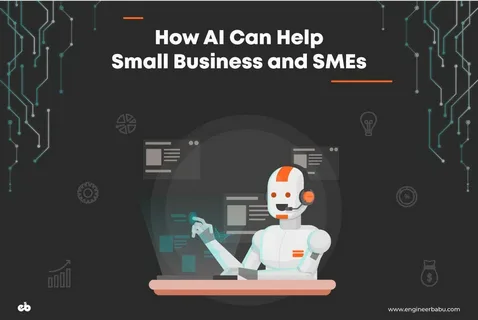
Running a small business is not easy. Owners often juggle multiple roles—manager, marketer, accountant, customer support agent, and sometimes even delivery driver. Time, budget, and manpower are always limited. This is where AI for small business automation is becoming a game changer.
Artificial Intelligence is no longer just for big corporations with huge budgets. Today, even small businesses can use AI-powered tools to automate daily tasks, reduce costs, improve customer experience, and grow faster than ever before.
In this article, we’ll explore how AI helps small businesses automate operations, practical use cases, benefits, challenges, and how to get started step by step.
What Is AI for Small Business Automation?
AI for small business automation means using artificial intelligence tools to handle repetitive, time-consuming, and rule-based tasks without constant human involvement.
Instead of manually:
-
Replying to customer emails
-
Posting on social media
-
Managing invoices
-
Tracking inventory
-
Scheduling appointments
AI tools can do these tasks automatically—accurately and efficiently.
Automation doesn’t replace human creativity or decision-making. Instead, it frees business owners to focus on strategy, innovation, and customer relationships.
Why Small Businesses Need AI Automation Today
Small businesses face unique challenges:
-
Limited staff
-
Tight budgets
-
High competition
-
Increasing customer expectations
AI automation helps solve these problems by:
-
Saving Time – Tasks that took hours can be done in minutes
-
Reducing Costs – Less need for manual labor
-
Improving Accuracy – Fewer human errors
-
Scaling Easily – Handle growth without hiring immediately
-
Staying Competitive – Compete with larger businesses
Simply put, AI allows small businesses to do more with less.
Key Areas Where AI Automates Small Businesses
Let’s break down the most important areas where AI is already helping small businesses automate operations.
1. Customer Support Automation
Customer support is often one of the most time-consuming tasks.
How AI Helps:
-
Chatbots answer common questions 24/7
-
AI email responders suggest or send replies
-
Automated ticket systems prioritize issues
Benefits:
-
Faster response times
-
Better customer satisfaction
-
Reduced workload on staff
Even a small online store can use AI chatbots to handle FAQs like order status, refunds, or product details.
2. Marketing and Social Media Automation
Marketing consistently is hard for small business owners. AI simplifies this dramatically.
AI Marketing Automation Includes:
-
Auto-generating social media posts
-
Scheduling posts at the best times
-
Writing email campaigns
-
Creating ad copy
-
Analyzing campaign performance
AI tools can even suggest what type of content works best for your audience.
Result:
More visibility, better engagement, and less stress.
3. Sales and Lead Management
Following up with leads manually often leads to missed opportunities.
AI Can:
-
Track customer behavior
-
Score leads automatically
-
Send follow-up emails
-
Predict which leads are more likely to convert
This helps small businesses close more sales without hiring extra sales staff.
4. Accounting and Finance Automation
Managing finances is critical—but time-consuming.
AI Financial Automation:
-
Auto-generate invoices
-
Track expenses
-
Categorize transactions
-
Predict cash flow
-
Detect unusual spending
With AI handling routine accounting tasks, business owners get clear financial insights without being accounting experts.
5. Inventory and Supply Chain Management
For retail and e-commerce businesses, inventory management is crucial.
AI Helps By:
-
Predicting demand
-
Preventing overstock or stockouts
-
Tracking supplier performance
-
Automating reorders
This ensures smooth operations and better profit margins.
6. HR and Employee Management
Even small teams require proper management.
AI in HR Automation:
-
Resume screening
-
Employee scheduling
-
Attendance tracking
-
Payroll processing
AI reduces administrative workload and helps owners focus on team growth and culture.
Benefits of AI for Small Business Automation
The impact of AI automation goes beyond convenience.
Major Benefits Include:
-
Increased productivity
-
Faster decision-making
-
Consistent business processes
-
Better customer experience
-
Data-driven insights
-
Improved scalability
Small businesses using AI automation often grow faster than those relying only on manual processes.
Common Myths About AI Automation
Despite its benefits, many small business owners hesitate to adopt AI due to misconceptions.
Myth 1: AI Is Too Expensive
Reality: Many AI tools offer free or affordable plans.
Myth 2: AI Is Too Complicated
Reality: Most tools are beginner-friendly and require no coding.
Myth 3: AI Will Replace Humans
Reality: AI supports humans—it doesn’t replace creativity or relationships.
How to Start Using AI for Small Business Automation
Getting started doesn’t require a huge investment or technical skills.
Step 1: Identify Repetitive Tasks
Look for tasks you do daily or weekly.
Step 2: Choose One Area to Automate
Start with customer support, marketing, or finance.
Step 3: Select Simple AI Tools
Pick tools with easy dashboards and tutorials.
Step 4: Test and Improve
Monitor results and fine-tune settings.
Step 5: Scale Gradually
Add more automation as your business grows.
Challenges of AI Automation (And How to Handle Them)
While AI offers many advantages, it’s not without challenges.
Common Challenges:
-
Initial setup time
-
Data quality issues
-
Over-automation risks
-
Dependency on tools
Solutions:
-
Start small
-
Keep human oversight
-
Regularly review AI outputs
-
Use AI as assistance, not replacement
The Future of AI for Small Business Automation
The future looks extremely promising. AI tools are becoming:
-
Smarter
-
Cheaper
-
More customizable
-
More human-like
In the coming years, small businesses will be able to run highly automated operations with minimal staff while maintaining a personalized customer experience.
Those who adopt AI early will have a huge competitive advantage.
Final Thoughts
AI for small business automation is no longer a luxury—it’s a necessity. From customer support and marketing to finance and inventory, AI helps small businesses save time, reduce costs, and grow efficiently.
You don’t need to automate everything at once. Start small, learn gradually, and let AI handle the boring tasks—so you can focus on building your vision.
In today’s competitive market, the smartest small businesses aren’t working harder—they’re working smarter with AI.