Your crawl space may be the most neglected part of your home — hidden beneath the floors, rarely visited, and easy to forget about. But what happens in that dark, confined space directly affects everything above it: your floors, your air quality, your energy bills, and the structural integrity of your entire home. If you’ve started searching for “crawl space repair near me,” you’re already taking the right step. This guide will walk you through everything you need to know — from recognizing the warning signs to understanding repair costs and choosing the right local contractor.
Why Your Crawl Space Matters More Than You Think
Most homeowners never think about their crawl space until something goes wrong. But this area beneath your home plays a critical role in maintaining structural stability and healthy indoor air quality. A damp or damaged crawl space creates an ideal environment for pests, rodents, mold, and fungi — all of which threaten your home’s structural integrity and the health of everyone inside.
Water is the root cause of most crawl space problems. Because there is no concrete floor to block moisture, water seeps in through the soil, foundation walls, and vents, feeding mold, softening wood for insects like termites, and causing floor joists and beams to rot over time. Left unchecked, these issues can escalate from a minor moisture problem into major structural damage that costs tens of thousands of dollars to repair.
The good news is that most crawl space problems, when caught early, are very manageable. The key is knowing what to look for.
8 Signs Your Crawl Space Needs Repair
You don’t need to crawl under your house to notice that something is wrong. Many of the most telling signs of crawl space damage show up in your living spaces. Here are eight red flags that mean it’s time to search for crawl space repair near you:
1. Musty or Damp Odors A persistent musty smell rising from your floors or coming through your vents is one of the earliest and most reliable signs of crawl space trouble. It typically indicates moisture buildup and mold or mildew growth beneath your home.
2. Sagging, Bouncy, or Uneven Floors If certain spots in your floor feel soft, dip lower than surrounding areas, or give too much when you walk on them, this points to weakened floor joists or support beams in the crawl space. This is a structural issue that requires prompt professional attention.
3. High Indoor Humidity If your home feels unusually humid or clammy — especially during warmer months — moisture from an unsealed or damaged crawl space may be infiltrating your living areas, raising indoor humidity levels and causing discomfort.
4. Visible Mold or Wood Rot Any signs of mold appearing as dark spots on wood, insulation, or masonry in the crawl space signal serious moisture problems that can spread to the rest of your home’s structure if not addressed immediately.
5. Pest Infestations Rodents, termites, ants, and other insects often target crawl spaces first. If you’ve noticed pest activity in or around your home, a damaged or open crawl space may be the entry point.
6. Standing Water or Excessive Moisture Pools of water under your home signal drainage problems and potential foundation damage. If water is pooling after rain or during wet seasons, it needs to be addressed before it weakens your home’s foundation.
7. Increased Allergy or Asthma Symptoms Mold spores and dust mites thrive in damp crawl spaces and can enter your home through the HVAC system. If your family is experiencing unexplained respiratory issues or worsening allergies, your crawl space may be contributing to the problem.
8. Sticking Doors or Cracked Walls Doors that no longer close properly and new cracks appearing in your walls or ceilings can indicate that your home is settling unevenly — a condition often linked to structural problems originating in the crawl space.
If you notice any combination of these warning signs, don’t wait. Ignoring early signs of crawl space issues can lead to costly repairs, unhealthy indoor air, and structural instability in your home.
Common Types of Crawl Space Repairs
When you find a crawl space repair contractor near you, the scope of work will depend on the specific problems identified during inspection. Here are the most common types of crawl space repairs:
Waterproofing and Drainage Systems Waterproofing is often the first and most critical step in any crawl space repair project. This may include installing interior drainage channels, French drains, sump pumps, and sealants to redirect water away from the foundation and keep the space dry. French drain installation typically costs between $1,500 and $5,000, while sump pump installation ranges from $640 to $2,100.
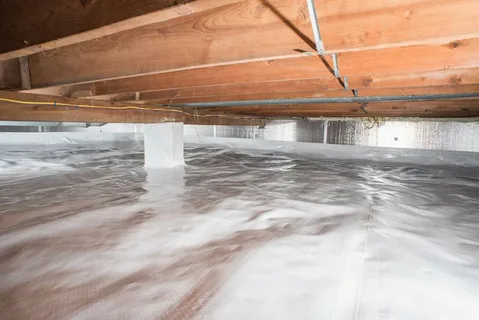
Vapor Barrier Installation A vapor barrier is a sheet of heavy-duty plastic installed across the crawl space floor and sometimes walls to block ground moisture from rising into the space. This is one of the most cost-effective crawl space repairs, with installation typically running between $1,200 and $4,000 depending on the size of the space.
Mold Remediation If mold has taken hold in your crawl space, it must be professionally treated before any other repairs are made. Mold remediation costs between $15 and $30 per square foot, or roughly $1,500 to $4,000 for an average-sized crawl space.
Floor Joist and Beam Repair or Replacement When moisture or pests have damaged the structural wood in your crawl space, floor joists and support beams may need to be sistered (reinforced with a parallel beam), repaired, or fully replaced. Replacing a single floor joist costs between $100 and $300, while replacing a full support beam can run from $1,500 to $5,000 per beam.
Structural Support Installation For sagging floors caused by failing support posts or settling foundations, contractors install heavy-duty steel support jacks or concrete piers to permanently stabilize the structure. These systems are engineered for strength and are typically backed by a manufacturer warranty.
Insulation Replacement Old or damaged insulation — especially fiberglass, which absorbs moisture and promotes wood rot — should be removed and replaced with spray foam or rigid foam board insulation designed for damp environments. Removing and replacing damaged insulation typically costs between $1,000 and $4,000.
Crawl Space Encapsulation In cases where moisture is a persistent problem, full encapsulation — sealing the entire crawl space with a heavy-duty vapor barrier, insulation, and a dehumidifier — may be the most comprehensive long-term solution. Encapsulation costs between $3,000 and $15,000 depending on the size and condition of the space.
How Much Does Crawl Space Repair Cost?
Crawl space repair costs vary widely based on the type and extent of damage. The national average for crawl space repair is around $6,000, with most projects falling between $1,500 and $15,000 or more depending on the scope of work.
Here’s a quick reference for common repair costs:
| Repair Type | Estimated Cost |
|---|---|
| Vapor barrier installation | $1,200 – $4,000 |
| Mold remediation | $1,500 – $4,000 |
| Floor joist replacement | $100 – $300 per joist |
| Support beam replacement | $1,500 – $5,000 per beam |
| Sagging floor repair | $1,000 – $5,000 |
| French drain installation | $1,500 – $5,000 |
| Sump pump installation | $640 – $2,100 |
| Full crawl space encapsulation | $3,000 – $15,000 |
| Water removal and damage repair | $2,000 – $10,000 |
Several factors influence your final cost, including the size and accessibility of your crawl space, the severity of existing damage, the local cost of labor, and whether permits are required in your municipality. Crawl spaces with low clearance — under 18 inches — are harder to access, which increases labor time and cost. Pre-existing issues like standing water, mold, or foundation damage must also be addressed before other repairs can be completed, adding to the total.
The most important thing to remember: the longer you wait to address crawl space problems, the more expensive they become. A minor moisture issue that costs a few hundred dollars to fix today can turn into a full structural repair costing tens of thousands if left unaddressed.
What to Expect During a Crawl Space Repair
A professional crawl space repair typically follows a clear process:
Inspection: A qualified contractor will perform a thorough inspection of your crawl space, checking for water damage, mold growth, pest activity, structural damage, and insulation condition. Professional evaluations identify underlying issues that DIY inspections often miss, allowing for a tailored repair plan that addresses root causes rather than just symptoms.
Diagnosis and Estimate: After the inspection, the contractor will explain what they found, recommend a repair plan, and provide a written estimate that itemizes materials, labor, and project timeline.
Prep Work: Before repairs begin, any standing water is removed, debris is cleared, and pre-existing issues like mold or pest damage are treated.
Repairs: The contractor completes the agreed-upon work, which may include waterproofing, structural repairs, insulation replacement, and moisture control system installation.
Final Walkthrough: A reputable contractor will walk you through the completed work, explain how the systems function, and provide guidance on ongoing maintenance.
Most crawl space repair projects take between one and three days, depending on the extent of the damage and whether encapsulation is included.
How to Choose the Right Crawl Space Repair Contractor Near You
Choosing the wrong contractor — particularly one based solely on the lowest price — can lead to more damage and even higher costs to fix the problem correctly. Here’s what to look for when searching for crawl space repair near you:
Licensing and Insurance: Always verify that your contractor is properly licensed in your state and carries adequate liability insurance. Working in a crawl space involves significant physical risk and requires specialized coverage beyond basic handyman insurance.
Specialization: Choose a contractor who specializes in crawl space and foundation repair rather than a general handyman who offers it as an add-on service. Specialists bring deeper knowledge of moisture control, drainage systems, and structural repair specific to crawl spaces.
In-Person Inspection: Be wary of any company that provides a quote over the phone without visiting your home. Every crawl space is different, and a reputable contractor will always inspect the space in person before recommending repairs.
Detailed Written Estimates: A trustworthy contractor provides a written estimate that clearly itemizes all materials, labor, and expected timelines. Vague or suspiciously low estimates are a red flag.
Warranty on Work: Look for contractors who offer a workmanship guarantee or warranty on completed repairs. This demonstrates confidence in their work and protects your investment if problems arise after the job is done.
Customer Reviews and References: Research contractors on Google, Angi, Yelp, and the Better Business Bureau. Ask for references from past clients and follow up with them. A contractor with a strong local reputation and verifiable reviews is far more trustworthy than one offering rock-bottom pricing.
Red Flags to Avoid: High-pressure sales tactics, same-day decision pressure, prices dramatically lower than competitors, and unwillingness to provide proof of licensing or insurance are all warning signs that a contractor may not deliver quality work.
Tips for Saving Money on Crawl Space Repair
- Act early: Addressing problems when they’re small is always less expensive than waiting for them to worsen.
- Get at least three quotes: Comparing multiple estimates helps you understand fair pricing and avoid being overcharged.
- Do simple prep work yourself: Clearing debris and removing stored items from the crawl space before the contractor arrives can reduce billable labor hours.
- Bundle repairs: If you need both moisture control and structural repairs, having them done at the same time by the same contractor is usually more cost-effective than scheduling separate projects.
- Check your insurance: Some crawl space damage caused by covered events like burst pipes or storm damage may be partially covered by your homeowner’s insurance policy. Check your coverage before paying out of pocket.
Final Thoughts
Your crawl space is the foundation of your home’s health — literally and figuratively. Ignoring signs of damage may seem like an easy way to avoid a difficult conversation with your wallet, but the reality is that crawl space problems only grow more serious and more expensive over time. Whether you’re dealing with moisture intrusion, mold, sagging floors, or structural damage, finding a qualified crawl space repair contractor near you and addressing the issue promptly is always the smarter, more cost-effective choice.
Search for “crawl space repair near me,” request free inspections from multiple licensed contractors, compare their estimates carefully, and choose a professional who is transparent, experienced, and willing to stand behind their work. Your home — and your family — will be better for it.