Have you ever held a quarter or a dime between your fingers and felt those tiny grooves running along the edge? Most of us have touched them thousands of times without ever wondering why they’re there. Are they decorative? Do they help with grip? Or is there a deeper, more intriguing story behind those small ridges? As it turns out, the answer stretches back centuries — and it involves crime, precious metals, and one of history’s most brilliant scientific minds.
What Are Coin Ridges Called?
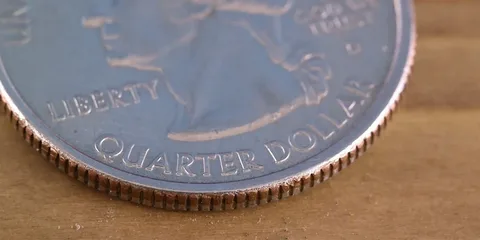
Before diving into the history, it helps to know the proper terminology. Those ridges on the edge of a coin are officially known as reeding — or sometimes referred to as “milled edges” in the United Kingdom. In numismatics (the study and collection of coins), reeded edges are often referred to as “ridged” or “grooved” in American usage, and “milled” in British usage. The process of creating them involves pressing narrow ridges into the coin’s edge using specialized machinery during the minting process.
Not every coin has them, though. In the United States, for example, pennies and nickels have smooth edges, while dimes, quarters, half dollars, and dollar coins feature reeded edges. This distinction, as we’ll soon discover, is not arbitrary at all.
The Crime That Started It All: Coin Clipping
To understand why coins have ridges, you need to travel back to 17th-century Europe — a time when coins were made of real precious metals like gold and silver, and their value was literally tied to the metal they contained. Unlike today’s currency, which derives its value from government backing, the worth of these coins was determined entirely by their metal content.
This created a tempting opportunity for fraudsters. Unscrupulous individuals discovered they could subtly shave off tiny amounts of metal from the edges of coins, then spend the lighter coin as if it were still full weight — a practice that became known as coin clipping. A skilled clipper would shave off just enough from multiple coins to eventually amass a quantity of scrap metal worth cashing in, while ensuring that no single coin was conspicuously reduced in size or weight.
The scheme was remarkably effective. Because coins in that era were somewhat crude and not perfectly uniform circles — many were made by pressing a small ingot with a stamp — the irregular edges made clipping difficult to detect. As coins circulated, they naturally lost small amounts of metal through wear, which gave clippers the perfect cover story. A clipped coin could easily be passed off as one that had simply worn down over time.
The problem grew to staggering proportions. Clipping had become so prevalent in England that by the end of the 17th century, almost half of the silver content was absent from circulating English coins. This created a serious discrepancy between the face value of coins and their actual metal content — a crisis that threatened to destabilize the entire economy and ripple outward to European colonies.
Clipping wasn’t always the work of lone individuals with a file, either. There were well-organized clipping schemes involving networks of conspirators — cashiers, servants, and apprentices — who worked together to systematically clip coins and return them to circulation without detection. Despite harsh punishments, including the death penalty, for clipping silver and gold coins, it remained a lucrative enterprise for decades.
Isaac Newton Steps In
The solution to this widespread fraud came from an unlikely source: Sir Isaac Newton — yes, the same man famous for the laws of motion and gravity. In the late 1600s, Newton was appointed Warden (and later Master) of the Royal Mint in England. He took the role seriously and was determined to reform the corrupt and inefficient mint.
Newton’s solution was elegant in its simplicity. He introduced milled edges — those ridges — to coins. The implementation of reeding by Isaac Newton in 1698 made it far more difficult to clip coins without detection. If a coin had been tampered with, the smooth patch left behind where the ridges had been shaved off would be immediately obvious to anyone who looked or felt the edge. A clipped coin with a smooth edge on any part of its circumference became a telltale sign of fraud.
The invention was a massive success. Any attempt to tamper with the edges would become immediately noticeable, giving both merchants and law enforcement a simple, reliable way to identify fraudulent coins. The ridged edge transformed from a revolutionary anti-fraud measure into a standard feature of coinage worldwide.
Why Only Some Coins Have Ridges
If you’ve ever wondered why pennies and nickels don’t have ridges while dimes and quarters do, history has the answer. Historically, only coins containing precious metals received reeded edges, because only those coins were valuable enough to clip. Pennies and nickels, made from base metals like copper and copper-nickel alloys, were never worth the effort of clipping — the metal content simply wasn’t valuable enough to justify the risk.
When the United States removed silver from dimes and quarters in 1965 (and half dollars in 1970), the reeded edges remained. By that point, reeding served important purposes beyond preventing clipping, and there was no practical reason to change the minting equipment. The tradition continued, and with it, the ridges.
The Modern Purposes of Coin Ridges
Today, most circulating coins are made from base metal alloys — not silver or gold. So why do ridges still exist? It turns out they serve several important functions in the modern world.
1. Anti-Counterfeiting
Intricate ridges make counterfeiting significantly more difficult. Imitating the exact pattern and sharpness of milled edges requires advanced machinery and expertise, discouraging amateur counterfeiters. The depth, spacing, and overall quality of the reeding can reveal whether a coin is genuine — deviations from expected standards often suggest counterfeiting or improper minting.
Intricate ridges make counterfeiting significantly more difficult. Imitating the exact pattern and sharpness of milled edges requires advanced machinery and expertise, discouraging amateur counterfeiters. The depth, spacing, and overall quality of the reeding can reveal whether a coin is genuine — deviations from expected standards often suggest counterfeiting or improper minting.
2. Accessibility for the Visually Impaired
One of the most meaningful modern purposes of coin ridges is the role they play in accessibility. Reeded edges help visually impaired individuals identify different coin denominations by sense of touch alone. In the United States, this is particularly important for distinguishing between coins of similar size — for example, a dime and a penny are close in diameter, but the dime’s ridges make it instantly identifiable by touch.
One of the most meaningful modern purposes of coin ridges is the role they play in accessibility. Reeded edges help visually impaired individuals identify different coin denominations by sense of touch alone. In the United States, this is particularly important for distinguishing between coins of similar size — for example, a dime and a penny are close in diameter, but the dime’s ridges make it instantly identifiable by touch.
3. Vending Machines and Automated Systems
In an era of vending machines, parking meters, and automated toll systems, coin ridges play a practical mechanical role. The edges help vending machines and other automated systems distinguish between denominations quickly and accurately, reducing errors and fraud in everyday transactions.
In an era of vending machines, parking meters, and automated toll systems, coin ridges play a practical mechanical role. The edges help vending machines and other automated systems distinguish between denominations quickly and accurately, reducing errors and fraud in everyday transactions.
4. Grip and Handling
The raised edges make coins easier to grip and handle, which is especially helpful for people with limited dexterity or arthritis. This seemingly minor detail improves the everyday usability of coins for millions of people.
The raised edges make coins easier to grip and handle, which is especially helpful for people with limited dexterity or arthritis. This seemingly minor detail improves the everyday usability of coins for millions of people.
5. Tradition and Trust
There is also an intangible but powerful reason: tradition. Reeded edges have become a standard in coinage, carrying forward a historical element that connects modern currency to its storied past. In an age increasingly dominated by digital transactions, the physical coin with its reeded edge remains a tangible connection to centuries of monetary history.
There is also an intangible but powerful reason: tradition. Reeded edges have become a standard in coinage, carrying forward a historical element that connects modern currency to its storied past. In an age increasingly dominated by digital transactions, the physical coin with its reeded edge remains a tangible connection to centuries of monetary history.
How Coin Ridges Are Made Today
Modern coin ridges are created during the minting process with impressive precision. It begins when large sheets of metal are punched into blank coins called “planchets.” These blanks are then softened through annealing — a process of heating and slowly cooling the metal to relieve internal stresses. The blanks are next passed through an upsetting mill, which raises a rim around their edges to prepare them for striking.
During striking, the prepared blanks are placed between two engraved dies. The edge reeding is created by a collar that surrounds the blank during this process. When the dies press into the blank, the metal is forced outward into the grooves of the collar, imprinting the reeded pattern onto the edge. The process demands precision so that each “reed” is uniform — a signal of authenticity and quality in the finished product.
A Small Detail With a Big Story
The next time you hold a coin, take a moment to run your finger along its edge. Those tiny ridges connect you to centuries of monetary history — to 17th-century fraudsters with files and shears, to Isaac Newton pacing the corridors of the Royal Mint, and to the ongoing human effort to protect the integrity of money.
What began as a clever solution to a very specific crime has evolved into a multi-purpose feature that serves security, accessibility, and tradition all at once. Reeded edges originated as a solution to prevent coin clipping in an era of precious metals, and have since evolved into safeguards against counterfeiting and tactile aids for the visually impaired — an enduring symbol of innovation in everyday life.
So the answer to “why do coins have ridges?” is far richer than you might expect. Those grooves aren’t just decoration. They’re centuries of human ingenuity, pressed right into the palm of your hand.