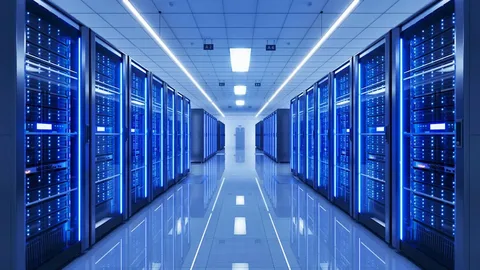
The artificial intelligence boom has a hidden cost — and it is measured in terawatt-hours. Behind every AI model trained, every chatbot query answered, and every autonomous agent deployed, there is a data center consuming enormous amounts of electricity. In 2025, the energy demands of AI infrastructure have moved from a background concern to a front-page crisis, reshaping power grids, straining utilities, raising household electricity bills, and triggering a global race to find sustainable energy solutions.
Here is a comprehensive look at the latest AI data center energy news — the numbers, the impacts, and what is being done about it.
The Scale of the Problem: Numbers That Demand Attention
The energy figures surrounding AI data centers are staggering, and they are growing faster than most projections anticipated just two years ago.
<cite index=”62-11,62-12″>Today, electricity consumption from data centers is estimated to amount to around 415 terawatt-hours (TWh), or about 1.5% of global electricity consumption in 2024. It has grown at 12% per year over the last five years.</cite>
<cite index=”61-2″>Gartner analysts estimate worldwide data center electricity consumption will rise from 448 terawatt-hours (TWh) in 2025 to 980 TWh by 2030.</cite> The International Energy Agency’s projections align closely, finding that <cite index=”62-20″>global electricity consumption for data centers is projected to double to reach around 945 TWh by 2030, representing just under 3% of total global electricity consumption in 2030.</cite>
The primary driver of this surge is not conventional computing — it is AI. <cite index=”61-6,61-7″>The rapid rise of AI-optimized servers is fueling the increase in data center power consumption. Their electricity usage is set to rise nearly fivefold, from 93 TWh in 2025 to 432 TWh in 2030. In 2025, AI-optimized servers are projected to represent 21% of total center power usage and 44% by 2030.</cite>
To put this in human terms: <cite index=”75-1″>global electricity demand from data centers is set to more than double over the next five years, consuming as much electricity by 2030 as the whole of Japan does today.</cite>
In the United States, the picture is equally dramatic. <cite index=”63-19,63-20,63-21″>U.S. data centers consumed 183 terawatt-hours (TWh) of electricity in 2024, according to IEA estimates. That works out to more than 4% of the country’s total electricity consumption — and is roughly equivalent to the annual electricity demand of the entire nation of Pakistan. By 2030, this figure is projected to grow by 133% to 426 TWh.</cite>
Why AI Data Centers Consume So Much Power
Understanding the energy crisis requires understanding what makes AI data centers so power-hungry. <cite index=”77-24,77-25,77-26,77-27″>AI workloads require specialized graphics processing units (GPUs) that consume significantly more electricity than conventional servers. AI model training, particularly for large-scale models, involves processing vast amounts of data and billions of parameters, making it an energy-intensive process. Even after training, running the models to generate responses — the inference stage — requires extensive amounts of energy. “AI servers use up to 10 times the power of a standard server, and companies are deploying them at an unprecedented scale,” noted UC Santa Barbara Professor Eric Masanet.</cite>
And it is not just the computing itself. <cite index=”65-7,65-8,65-9,65-10″>It is not just the computing that eats up power. Memory and cooling systems are major contributors, too. As AI models grow, they need more storage and faster access to data, which generates more heat. As the chips become more powerful, removing heat becomes a central challenge.</cite>
<cite index=”79-10,79-11,79-12″>Cooling accounts for 30–40% of total data center power use. This figure rises significantly in AI facilities where dense racks generate more heat. Traditional air cooling systems cannot keep pace with these demands, leading to inefficiencies and higher energy use.</cite>
The scale of individual facilities is also growing beyond anything previously seen. <cite index=”64-24,64-25,64-26,64-27″>The International Energy Agency says a typical hyperscale data center might use 100 megawatts, as much electricity as 100,000 households. And that is at the low end. Meta’s Hyperion project in Louisiana will need at least 5 GW to run — three times as much electricity as the entire city of New Orleans.</cite>
The Impact on Electricity Grids and Household Bills
The energy demands of AI data centers are not an abstract infrastructure challenge. They are landing directly on the electricity bills of ordinary households and businesses.
<cite index=”63-13,63-14″>In the PJM electricity market stretching from Illinois to North Carolina, data centers accounted for an estimated $9.3 billion price increase in the 2025-26 “capacity market.” As a result, the average residential bill is expected to rise by $18 a month in western Maryland and $16 a month in Ohio.</cite>
<cite index=”71-22″>One study from Carnegie Mellon University estimates that data centers and cryptocurrency mining could lead to an 8% increase in the average U.S. electricity bill by 2030, potentially exceeding 25% in the highest-demand markets of central and northern Virginia.</cite>
<cite index=”64-21,64-22″>Residential electricity prices jumped 7.1 percent in 2025 — more than double the inflation rate — and topped 20 percent in some states. The AI data center rush is not the only factor driving up prices, but it is a significant one.</cite>
Public awareness of this issue is growing rapidly. <cite index=”64-31″>A November 2025 nationally representative survey of 2,146 U.S. adults by Consumer Reports found that 78 percent of Americans are somewhat or very concerned that the new data centers being built across the country will make their energy bills go up.</cite>
The grid strain is also creating reliability concerns. <cite index=”65-16,65-17,65-18,65-19,65-20″>Even with all this advanced equipment, many data centers are not running efficiently. Different parts of the system do not always talk to each other. Scheduling software might not know that a chip is overheating or that a network connection is clogged. As a result, some servers sit idle while others struggle to keep up. This lack of coordination can lead to wasted energy and underused resources.</cite>
The Energy Mix: Renewables vs. Fossil Fuels
One of the most consequential questions in AI data center energy news is what fuels are actually powering these facilities — and the answer is complicated.
<cite index=”74-5,74-6,74-7,74-8″>Over the next five years, renewables meet nearly half of the additional demand, followed by natural gas and coal, with nuclear starting to play an increasingly important role. Coal, with a share of about 30%, is the largest source of electricity globally. Renewables — primarily wind, solar PV, and hydro — currently supply about 27% of the electricity consumed by data centers globally. Natural gas is the third-largest source today, meeting 26% of the demand, followed by nuclear with 15%.</cite>
The uncomfortable reality is that despite Big Tech’s renewable energy pledges, <cite index=”74-14″>natural gas and coal together are expected to meet over 40% of the additional electricity demand from data centers until 2030.</cite>
<cite index=”77-3,77-4,77-5,77-6″>Northern Virginia serves as a cautionary tale, where the region’s concentration of data centers has forced utilities to keep fossil fuel plants online to meet demand. While major tech companies pledge to power data centers with renewable energy, the reality is that the expansion is outpacing the deployment of clean energy sources. “Some companies are looking at nuclear power or geothermal solutions, but these are not yet widely available. Renewable energy simply isn’t scaling fast enough to match AI’s growth.”</cite>
In some data center hotspots, the consequences are already visible. <cite index=”66-13″>In Ohio, a data-center hot spot where commercial power consumption was up 11 percent, coal generation rose 23 percent.</cite>
Solutions: What the Industry Is Doing
The energy crisis is spurring a wave of innovation and investment in alternative power strategies for data centers.
Nuclear Power: Tech giants including Google, Microsoft, and Amazon have all made significant investments in nuclear energy — both conventional plants and emerging small modular reactors (SMRs). <cite index=”74-15,74-16″>After 2030, SMRs enter the mix, providing a source of baseload low-emissions electricity to data center operators. Currently, hyperscalers are among the key corporate backers of SMR development.</cite>
On-Site Power Generation: <cite index=”79-5,79-6,79-7″>More operators are turning to on-site power generation, which provides faster access to electricity, greater reliability, and improved sustainability. On-site power reduces reliance on overburdened utility grids, which can take years to expand capacity. According to the 2025 Data Center Power Report, 30% of all data center sites are expected to use on-site power by 2030, up from just 13% in early 2024.</cite>
Liquid Cooling: <cite index=”79-13,79-14,79-15″>Liquid cooling systems offer a significant efficiency solution. By delivering coolant directly to servers, these systems reduce energy consumption by up to 30% compared to air cooling. Combined with renewable energy sources, liquid cooling helps improve data center energy efficiency while meeting the high demands of AI workloads.</cite>
Geographic and Workload Optimization: <cite index=”77-7,77-8,77-9″>Placing AI data centers in regions with abundant renewable energy, such as Iceland or the Pacific Northwest, could reduce reliance on fossil fuels. Cloud providers can also shift AI tasks to locations where renewable energy is most available at any given time. AI models can be trained using fewer data points and optimized software to reduce energy consumption.</cite>
Battery Energy Storage: <cite index=”61-10″>Within the next 3 to 5 years, there is anticipated rapid growth in battery energy storage systems (BESS) to balance the fluctuations of solar and wind energy.</cite>
The Road Ahead: A Defining Infrastructure Challenge
The AI data center energy story is ultimately a story about choices — choices made by technology companies, energy regulators, policymakers, and society at large about how to balance the extraordinary potential of AI against its very real environmental and economic costs.
<cite index=”68-7,68-8″>Even with efficiency gains, AI’s energy footprint is still expected to grow. “The key is ensuring that this growth aligns with sustainable energy deployment rather than exacerbating fossil fuel dependence.”</cite>
<cite index=”72-17,72-18,72-19,72-20,72-21″>If partnerships between data centers and energy providers fail, power and grid capacity constraints could hamstring AI advancement. Power companies could miss an opportunity to expand and modernize the grid. Domestic manufacturing growth in some sectors could stall and lose an edge. These developments could jeopardize U.S. economic and geopolitical leadership. Indeed, staking an infrastructural lead in powering AI may now be a matter of competitiveness and even national security.</cite>
The AI revolution is real, transformative, and accelerating. But it runs on electricity — and the world’s ability to generate that electricity cleanly, affordably, and at unprecedented scale will determine whether the AI era is remembered as a triumph of human ingenuity or a cautionary tale about the costs of unchecked ambition.