In a world that never stops evolving, the idea of a “smart home” has transformed from a luxury concept into a living reality for millions of people. The next generation of innovation, powered by FutureThing Smart Homes, is set to redefine how humans interact with their living spaces. From intelligent climate control and AI-powered security systems to seamless voice integration and self-learning environments, FutureThing represents a future where homes think, learn, and respond — just like humans.
Let’s take an in-depth look into how FutureThing Smart Homes are shaping the future of connected living, and what this revolution means for comfort, sustainability, and everyday life in 2050 and beyond.
1. The Evolution of the Smart Home
Just a few decades ago, home automation meant remote-controlled lights or basic voice assistants. Today, smart homes have become entire ecosystems of interconnected devices — refrigerators that order groceries, thermostats that learn your habits, and voice systems that act as digital butlers.
FutureThing pushes this evolution even further. It combines artificial intelligence, Internet of Things (IoT), machine learning, and predictive analytics into one integrated ecosystem. The result? A home that doesn’t just automate — it anticipates your needs.
Imagine waking up to a gentle sunrise simulation, your coffee brewing at the perfect temperature, and your AI assistant adjusting the blinds according to the day’s weather. That’s not just convenience — it’s an intelligent lifestyle.
2. What Is FutureThing Smart Home Technology?
FutureThing Smart Homes represent a fully integrated AI-driven system that connects every device, appliance, and environment setting into one cohesive network. It’s built on three key principles:
-
Intelligence – The home learns from your daily patterns and preferences.
-
Connectivity – Every device communicates seamlessly within the ecosystem.
-
Sustainability – Efficiency and eco-conscious design power every decision.
Through deep learning algorithms, FutureThing’s AI gathers data about your routines — when you wake up, what music you prefer, how you adjust lighting, and even your sleep patterns. Over time, it creates a personalized comfort profile that ensures your home evolves with your lifestyle.
3. The Core Features of FutureThing Smart Homes
a. AI-Driven Automation
Unlike traditional automation, which depends on manual setup or commands, FutureThing Smart Homes use predictive AI. The system understands your behavior and automatically adjusts settings to maximize convenience and energy efficiency.
For example:
-
Your lights dim when you start watching TV.
-
The home locks itself once you leave for work.
-
Temperature adjusts based on your body temperature detected via wearable devices.
b. Unified Control System
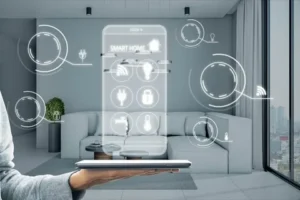
FutureThing introduces a central control hub, accessible through smartphones, tablets, or voice assistants. Instead of juggling multiple apps for lighting, security, or entertainment, users manage everything through a single AI interface.
This unified hub connects with over 1,000 devices — from smart refrigerators and air purifiers to EV chargers and robotic vacuums — creating a truly holistic living experience.
c. Adaptive Learning
At the heart of FutureThing lies adaptive machine learning. This system constantly evolves. When you try something new — like changing your dinner time or sleep schedule — the AI quickly adapts to reflect your habits, ensuring a perfect balance between comfort and control.
d. Enhanced Security and Privacy
Security remains a top priority. FutureThing Smart Homes employ biometric entry systems, facial recognition cameras, and real-time threat detection powered by AI. Each event is analyzed instantly, allowing immediate alerts or lockdowns when suspicious activity is detected.
All data is protected using quantum encryption, ensuring total privacy — even from external network threats.
e. Sustainable Energy Optimization
The system’s eco-intelligence manages energy usage by analyzing weather forecasts, power consumption, and peak hours. For example, it can delay your washing machine until electricity rates are lowest or redirect solar energy to charge your EV during optimal sunlight hours.
This efficiency can reduce household energy bills by up to 45% annually, making FutureThing not just futuristic, but financially smart.
4. The Power of AI in FutureThing Smart Homes
AI is the soul of the FutureThing ecosystem. It’s not just about automation — it’s about intuition.
a. Predictive Behavior Modeling
AI monitors patterns: when you cook, sleep, or exercise. It uses this data to create custom schedules — your lights dim at bedtime, your favorite playlist starts in the morning, and your shower preheats exactly when you step in.
b. Natural Language Understanding
Voice control has matured. Instead of simple commands like “turn off the lights,” you can say, “I’m feeling tired,” and the AI responds by lowering the lights, playing calming music, and cooling the room.
This natural, emotional connection between user and home turns technology into a genuine companion.
c. Health Integration
FutureThing integrates with wearable health trackers and medical sensors. If your heart rate spikes, the home might adjust room temperature, dim lights, or even contact emergency services — all automatically.
It’s more than smart living; it’s proactive wellness technology.
5. Security and Privacy in a Connected World
As homes get smarter, security must get smarter too.
a. Biometric Protection
Traditional keys and passwords are gone. FutureThing homes use biometric authentication, such as facial recognition, retina scans, or fingerprint verification, ensuring only authorized individuals can enter or access control systems.
b. AI-Powered Surveillance
The system uses computer vision to detect irregularities — like a window opening unexpectedly or an unfamiliar face at the door. Within seconds, the AI sends alerts to your phone or local authorities.
c. Data Privacy Assurance
FutureThing operates on a decentralized data model, meaning user data isn’t stored on a single cloud but distributed across encrypted networks. This prevents hacking or unauthorized access and ensures full transparency in how your data is used.
6. Sustainability and Energy Efficiency
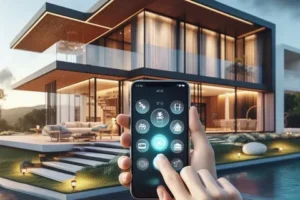
FutureThing Smart Homes are designed to be eco-friendly from the ground up.
-
Smart lighting adjusts brightness based on time of day and occupancy.
-
AI thermostats optimize temperature while conserving power.
-
Water management systems detect leaks and reduce waste.
-
Renewable integration ensures efficient use of solar or wind energy.
In an age of climate concern, FutureThing proves that technology and sustainability can coexist harmoniously — offering luxury without waste.
7. Entertainment and Lifestyle Integration
FutureThing transforms every moment at home into a personalized experience.
-
Smart entertainment systems recommend shows based on your mood.
-
Surround-sound AI speakers adjust volume to match your activity.
-
Augmented reality (AR) windows can simulate outdoor views or natural landscapes.
-
AI chefs in smart kitchens suggest healthy recipes using available ingredients.
Your home becomes more than shelter — it becomes a partner in your daily life, helping you relax, focus, or entertain effortlessly.
8. FutureThing Smart Homes and the Future of Work
As remote work becomes standard, FutureThing integrates advanced productivity environments within the home.
-
Smart desks with posture sensors adjust automatically.
-
AI monitors optimize lighting and sound for concentration.
-
Virtual reality (VR) meeting rooms enable seamless global collaboration.
Imagine working in a digitally enhanced workspace that improves creativity and reduces fatigue — without leaving your living room.
9. Integration with Urban Infrastructure
FutureThing Smart Homes don’t stop at your front door. They connect to smart cities, linking traffic data, energy grids, and public services.
For instance:
-
Your car’s AI communicates with city networks to find open parking spaces.
-
Garbage collection systems sync with waste sensors.
-
Energy surpluses from home solar panels feed directly into the city grid.
This network of interconnected homes and cities represents a leap toward collective intelligence, where every household contributes to global efficiency.
10. The Future of Human and AI Coexistence
The question is no longer whether AI belongs in our homes — but how it can coexist with humanity in meaningful ways.
FutureThing’s design philosophy centers on collaboration, not control. The technology learns empathy — recognizing stress, fatigue, or happiness through voice tone and environmental cues. It adjusts accordingly, making homes more human than ever.
As FutureThing evolves, we can expect deeper emotional intelligence, personalized environments, and even AI companions capable of conversation, learning, and care.

11. Potential Challenges and Ethical Considerations
While exciting, the rise of smart homes also brings challenges:
-
Data ownership – Who controls the information your home collects?
-
System dependence – Could humans become overly reliant on automation?
-
Security vulnerabilities – Can hackers exploit connected systems?
FutureThing addresses these through transparent AI governance, strong encryption, and user-controlled permissions. Every homeowner can customize what data is shared and how it’s used.
This approach ensures that innovation doesn’t compromise freedom or privacy.
12. The Economic and Social Impact
The smart home revolution will influence industries worldwide:
-
Construction will evolve with integrated AI design.
-
Energy providers will shift toward adaptive smart grids.
-
Healthcare will expand into home monitoring and wellness systems.
Even the real estate market will transform — FutureThing-equipped homes will command premium prices due to their built-in efficiency and appeal.
Socially, these homes will bridge gaps between accessibility and independence — empowering elderly or disabled individuals to live more safely and comfortably.
13. The Road Ahead: FutureThing in 2050
By 2050, FutureThing Smart Homes could become the global standard. Imagine:
-
AI ecosystems connecting billions of homes worldwide.
-
Self-repairing devices that fix themselves using nanotechnology.
-
Holographic interfaces replacing screens.
-
Emotionally intelligent AI assistants managing entire households.
Homes will become alive — spaces that feel, respond, and evolve with their inhabitants. What once felt like science fiction will soon be daily life.
14. Why FutureThing Smart Homes Matter
At its core, FutureThing isn’t just about luxury or technology. It’s about enhancing the human experience — creating spaces that care, protect, and adapt.
It brings people closer to their environment, encourages sustainable living, and transforms routine into something extraordinary. Whether you’re a professional, a parent, or a retiree, FutureThing Smart Homes redefine what it means to live well.
15. Conclusion: The Future Is Already Here
The rise of FutureThing Smart Homes signals the dawn of a new era in human living — one where homes are not just structures but sentient companions. With AI at the core, every wall, device, and surface becomes part of a connected ecosystem built to learn, evolve, and care.
As technology continues to advance, FutureThing stands at the forefront of intelligent living — merging comfort, efficiency, and sustainability into one seamless experience. The homes of tomorrow are already here, and they’re smarter, greener, and more human than ever before.
So, when you imagine your dream home of the future, think beyond automation — think FutureThing.