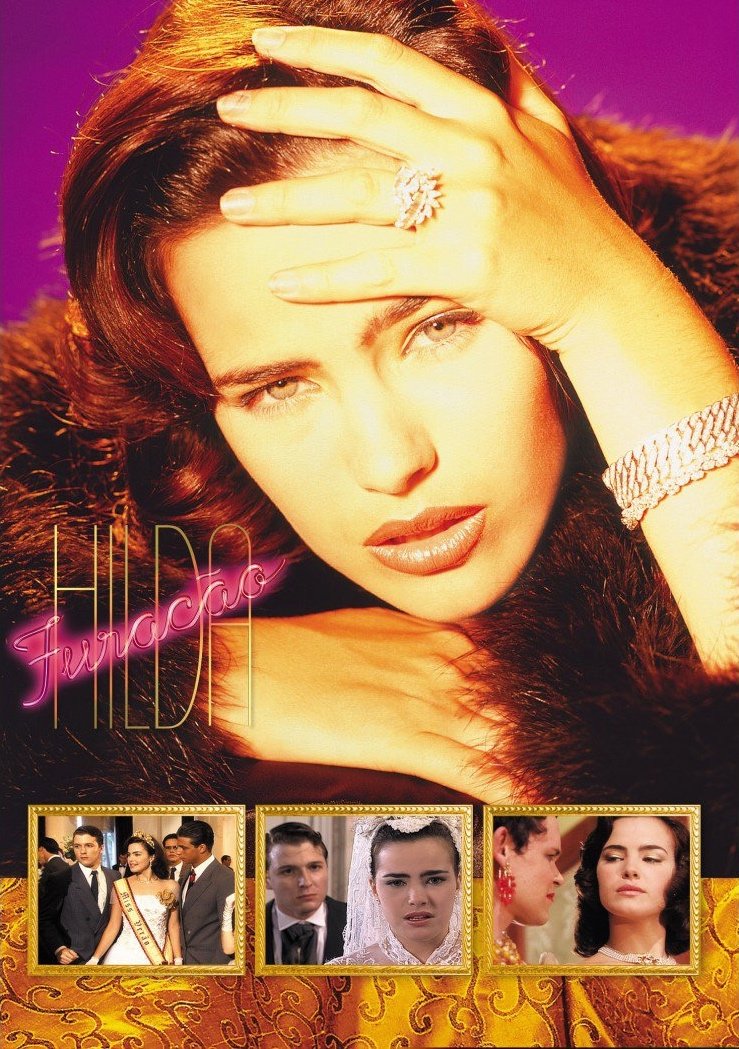
Few names in Brazilian popular culture evoke such a mixture of fascination, myth, and social commentary as Hilda Furacão. Originally a real person, Hilda became a legendary figure thanks to her unconventional life, the best-selling novel that fictionalized her story, and the acclaimed television miniseries that brought her to an even wider audience. More than a tale of scandal, the saga of Hilda Furacão is an exploration of societal norms, hypocrisy, and the search for freedom in mid-20th-century Brazil. This article delves deeply into Hilda’s life, the narrative built around her, and her lasting impact on Brazilian collective memory.
The Historical Hilda Furacão: Fact or Fiction?
The real Hilda Maia Valentim was born in 1930 in Belo Horizonte, the capital of Minas Gerais, Brazil. Raised in a middle-class family, Hilda’s early years were marked by a strict Catholic upbringing, with aspirations for her to marry well and live a respectable life. However, her path took a dramatic turn in her early twenties, transforming her from a socialite into a legend.
In the 1950s, Hilda abandoned her comfortable lifestyle, leaving her fiancé at the altar and disappearing into the bohemian underworld of Belo Horizonte. She reemerged as “Hilda Furacão” (Hilda the Hurricane), an iconic prostitute who captivated the city’s elite and commoners alike with her beauty, intelligence, and boldness. Her nickname, “Furacão,” reflected the whirlwind she created in the conservative society of the time.
While many details of her life are shrouded in legend, Hilda’s decision to work in the Guaicurus Street brothels was a shock to her family and the city. Hilda was known not only for her allure but for her independence and the respect she commanded among her peers and clients. According to various reports, she eventually left Brazil and settled in Argentina, where she lived out her days away from the spotlight, passing away in Buenos Aires in 2019.
The Novel: Roberto Drummond’s “Hilda Furacão”
The myth of Hilda grew exponentially in 1991 with the publication of “Hilda Furacão,” a novel by journalist and author Roberto Drummond. Blending fact with fiction, Drummond’s book transformed Hilda into both a symbol and a protagonist of her era.
Set in the 1950s, the novel explores the tension between desire and repression in Brazilian society. It follows Hilda’s journey from a model daughter to the most famous prostitute in Belo Horizonte, weaving in the stories of priests, politicians, and socialites who cross her path. The book’s tone is lyrical and dramatic, mixing humor, romance, and biting social critique.
Drummond’s Hilda is more than a “fallen woman”—she is a force of nature, challenging hypocrisy, exposing the double standards of the elite, and ultimately seeking her own path to redemption and happiness. The novel’s success cemented Hilda Furacão as a fixture in Brazilian cultural consciousness.
The Miniseries: Bringing Hilda Furacão to the Screen
In 1998, TV Globo adapted Drummond’s novel into a lavish miniseries, directed by Wolf Maya and starring Ana Paula Arósio as Hilda and Rodrigo Santoro as the young friar Malthus, who becomes infatuated with her. With a stellar cast, period costumes, and evocative sets, the miniseries became a sensation across Brazil.
The adaptation brought Hilda’s story to new generations, reigniting debates about morality, freedom, and the role of women in society. The chemistry between Arósio and Santoro, combined with sharp dialogue and poignant drama, turned the series into one of Globo’s most beloved productions of the decade.
The miniseries also delved into themes of religious repression, forbidden love, and social alienation—issues as relevant today as they were in Hilda’s time. For many viewers, the series’ greatest achievement was its humanization of Hilda, portraying her not just as a symbol, but as a complex, vulnerable, and courageous woman.
Hilda Furacão as a Symbol of Rebellion and Feminine Power
Hilda Furacão’s story resonates far beyond the details of her personal life. In the context of 1950s Brazil—a society governed by patriarchal values, Catholic doctrine, and rigid social hierarchies—her choices represented an act of rebellion. She refused to conform to the expectations placed upon her as a woman, rejecting marriage and motherhood for a life on her own terms.
For feminists and social commentators, Hilda’s narrative is a critique of the ways women’s sexuality and autonomy have been policed and stigmatized. By embracing her identity and redefining her value, Hilda challenged the notion that a woman’s worth lay solely in her virtue. She forced society to confront its own prejudices, and in doing so, became a symbol of liberation for future generations.
The Legacy of Hilda Furacão in Brazilian Culture
Literature and Television
Drummond’s novel and the Globo miniseries remain touchstones for Brazilian audiences, regularly cited in discussions about gender, morality, and social change. The character of Hilda has inspired countless essays, academic studies, and cultural references.
Popular Imaginary
Hilda Furacão’s story has become part of the Brazilian “imaginary”—a blend of myth, memory, and folklore. Her name is invoked in discussions about women who defy convention, about the contradictions of Brazilian society, and about the enduring struggle for personal freedom.
Ongoing Relevance
Even decades after her disappearance from Brazil, Hilda’s story continues to resonate. In a country still grappling with issues of gender violence, sexual exploitation, and the policing of women’s bodies, Hilda Furacão serves as a reminder of both the costs and the power of resistance.
Criticism and Controversy
Not everyone views the legend of Hilda Furacão uncritically. Some argue that popular depictions glamorize a life marked by hardship and social exclusion. Others caution against romanticizing the figure of the prostitute, noting that real-life sex workers often face violence and marginalization.
However, defenders of the Hilda Furacão narrative point out that her story, as told by Drummond and in the miniseries, is less about glamorizing sex work and more about critiquing the hypocrisy of a society that exploits and condemns women like Hilda in equal measure.
Conclusion: The Enduring Spirit of Hilda Furacão
The legend of Hilda Furacão endures because it speaks to universal themes: the quest for identity, the courage to defy norms, and the complexities of desire and morality. Whether as a real woman, a literary character, or a television icon, Hilda Furacão challenges us to question the boundaries of respectability and the true cost of freedom.
Her story, rooted in the streets of Belo Horizonte but echoing through the decades, is a testament to the power of myth and the enduring human search for self-determination. In remembering Hilda Furacão, Brazil remembers not only the woman, but the storm she unleashed—a hurricane of change, controversy, and ultimately, inspiration.