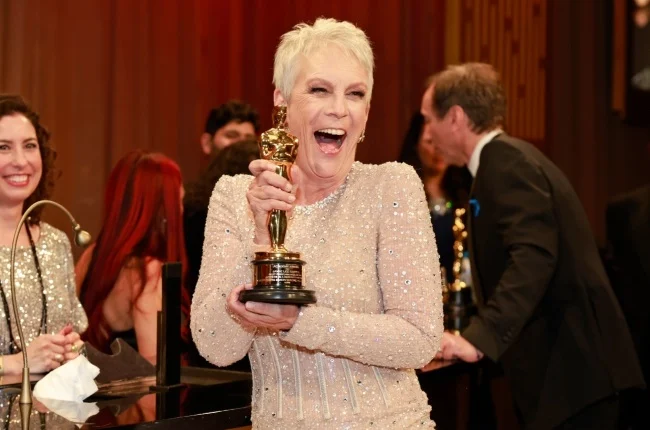
When film enthusiasts discuss the most memorable comedies of the 1980s, “Trading Places” inevitably stands out. Released in 1983, this sharp-witted social satire directed by John Landis not only brought together the comedic geniuses of Eddie Murphy and Dan Aykroyd, but also showcased a groundbreaking performance from Jamie Lee Curtis. For Curtis, “Trading Places” was more than just a breakout role in comedy—it was a pivotal moment that redefined her career, challenged Hollywood stereotypes, and cemented her legacy as one of the industry’s most versatile actresses.
Breaking the Scream Queen Mold
Before “Trading Places”, Jamie Lee Curtis was primarily known as a scream queen, a term lovingly applied for her roles in horror classics such as “Halloween” (1978), “The Fog” (1980), and “Prom Night” (1980). These films, especially John Carpenter’s “Halloween”, made her a household name and established her as a reliable female lead in suspenseful, high-stakes settings. However, the horror genre also risked typecasting Curtis, limiting her opportunities to demonstrate her full range as an actress.
Landing the part of Ophelia in “Trading Places” was, therefore, a transformative opportunity. The character—a quick-witted, resourceful, and unapologetically pragmatic sex worker—was worlds apart from the terrified teens and women Curtis had previously portrayed. Ophelia was not only central to the plot, but she was also a refreshingly independent and layered character, a rarity for women in comedies of that era.
Plot Overview: The Role of Ophelia
“Trading Places” centers on a classic “nature versus nurture” premise. The wealthy, educated Louis Winthorpe III (Dan Aykroyd) and the streetwise hustler Billy Ray Valentine (Eddie Murphy) have their lives swapped as part of a cruel bet concocted by two powerful commodities brokers, the Duke brothers. In the midst of this social experiment, Ophelia (Jamie Lee Curtis) enters the story when she rescues a destitute Winthorpe and helps him plot his revenge.
Ophelia is not a mere love interest or comic relief. She is a partner, a strategist, and, arguably, the film’s moral center. Curtis imbues Ophelia with intelligence and agency, making her an indispensable part of the story’s success. Whether she’s dispensing worldly advice, outsmarting villains, or showing unexpected kindness, Curtis’s performance ensures Ophelia is a fully realized character.
Critical and Audience Reception
Upon release, “Trading Places” was a critical and commercial success, grossing over $90 million at the box office and earning praise for its sharp writing and energetic performances. Critics singled out Jamie Lee Curtis for her surprising comedic chops, impeccable timing, and the way she held her own alongside Murphy and Aykroyd, who were already established stars in comedy.
Curtis’s portrayal of Ophelia garnered her the BAFTA Award for Best Supporting Actress, a significant achievement that signaled her transition from horror starlet to respected comedic actress. The award was a testament to her ability to transcend genres and deliver memorable performances regardless of the role.
Noteworthy Scenes: The Infamous Reveal
One of the most talked-about scenes in “Trading Places” involves Curtis’s character briefly exposing herself. While this moment has been the subject of much discussion over the years, it’s essential to recognize that Curtis approached the scene with professionalism and grace. Rather than defining her role, the scene underscores Ophelia’s self-assurance and lack of shame about her profession. Curtis herself has acknowledged the scene’s notoriety, often with humor and candor, but always points back to the intelligence and substance of her character.
Impact on Jamie Lee Curtis’s Career
“Trading Places” was a crucial turning point for Jamie Lee Curtis. The film shattered the limitations of her “scream queen” persona and opened doors to a broader range of roles in Hollywood. After the success of “Trading Places”, Curtis went on to star in a diverse array of films, from action-packed blockbusters like “True Lies” (1994) to acclaimed comedies such as “A Fish Called Wanda” (1988) and family hits like “Freaky Friday” (2003). Each new role further demonstrated her remarkable versatility.
Curtis has frequently credited “Trading Places” as the film that changed the trajectory of her career. It gave her the confidence to pursue comedic roles and proved to directors and producers that she could be both funny and formidable. Her transformation from a horror icon to a comedic powerhouse is a testament to her talent and resilience in an industry often reluctant to let actors break out of typecasting.
Cultural Legacy and Influence
The enduring popularity of “Trading Places” is due in no small part to Jamie Lee Curtis’s performance. The film remains a staple of holiday movie marathons and is regularly referenced in discussions about the best comedies ever made. Ophelia, as portrayed by Curtis, is often cited as one of the most memorable female characters in 1980s cinema, thanks to her blend of wit, strength, and authenticity.
The character of Ophelia also broke ground in the way sex workers were depicted on screen. Instead of being a victim or a punchline, Ophelia is smart, autonomous, and essential to the plot’s resolution. Curtis’s performance challenged Hollywood’s tendency to pigeonhole women into one-dimensional roles and paved the way for more nuanced female characters in comedy.
Jamie Lee Curtis’s Own Reflections
In interviews and retrospectives, Jamie Lee Curtis has spoken glowingly about her time on “Trading Places.” She credits director John Landis for believing in her and offering her a role that would stretch her abilities. Curtis has also recalled the camaraderie on set with Murphy, Aykroyd, and the rest of the cast, describing it as a creatively stimulating and supportive environment.
Curtis’s humility and gratitude shine through when she discusses the film’s legacy. She recognizes that “Trading Places” not only changed her career, but also contributed to a broader shift in how women could be portrayed in comedies. Her performance continues to inspire actresses seeking to expand their range and challenge industry norms.
Revisiting the Film Today
More than four decades after its release, “Trading Places” remains relevant. Its themes of class inequality, social mobility, and the arbitrary nature of privilege resonate as strongly today as they did in the 1980s. Jamie Lee Curtis’s performance is a significant part of why the film has aged so well. New generations continue to discover her work in the film, often marveling at the comedic timing and emotional resonance she brings to Ophelia.
Conclusion: A Lasting Legacy
Jamie Lee Curtis’s turn as Ophelia in “Trading Places” is more than a career milestone; it’s a cultural touchstone. The film allowed Curtis to break free from the constraints of typecasting and proved her ability to thrive in any genre. For audiences, Ophelia remains a symbol of wit, resilience, and the power of genuinely well-crafted female characters in comedy.
As Curtis’s career continues to evolve—spanning genres, generations, and media—her work in “Trading Places” stands out as a defining moment not just for her, but for Hollywood as a whole. It’s a testament to what can happen when an actor is given the chance to surprise the world, and to the lasting impact of a performance that transcends expectations.